Can You Plant Now in North Carolina? A Seasonal Timing Guide
North Carolina’s long growing season can make planting feel possible almost any time, but a warm afternoon does not mean every crop is ready for the garden. The right choice depends on where you live, what you want to plant, and what the soil and forecast are doing. Use this guide to judge what can go in now and what should wait.
Start with your region, not a statewide date
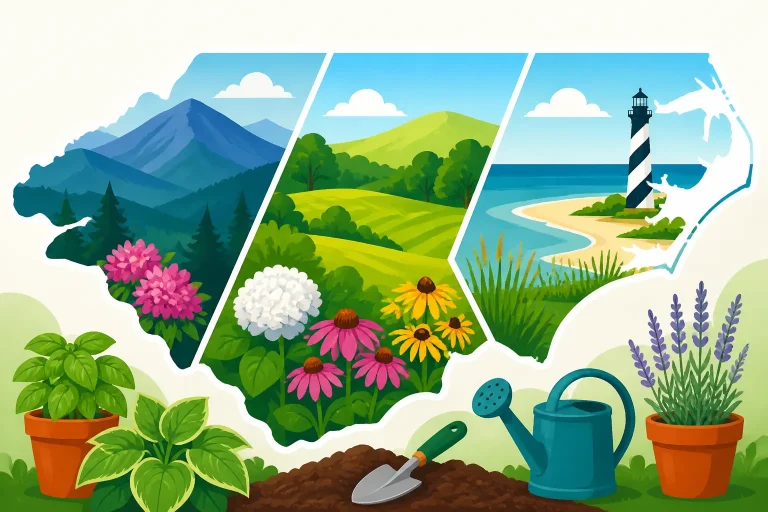
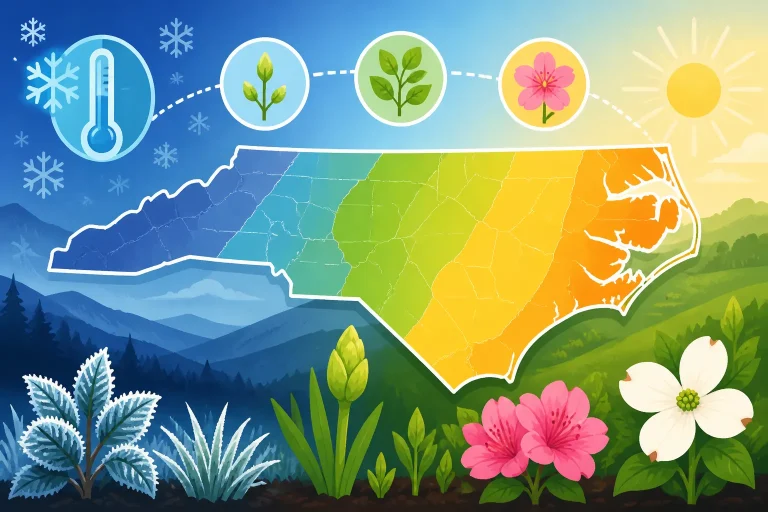
North Carolina stretches from the coast through the Piedmont to the mountains, and those regions do not move through spring or fall at the same pace. A planting window that works in a warm coastal yard may be too early for an inland site or a high-elevation garden. Even neighbors can have different conditions because of slope, shade, nearby buildings, and exposure to wind.
Start by identifying the broad region where you garden: Coastal Plain, Piedmont, or Mountain. If you are near a regional boundary, or at a higher elevation, use the conditions in your own yard rather than assuming the nearest city’s schedule applies. North Carolina Planting Regions: Coastal, Piedmont, or Mountain? explains how these areas differ and why elevation and coastal influence matter.
| Garden condition | What it can mean for planting |
|---|---|
| Coastal location or nearby water | Spring warmth may arrive earlier than farther inland, but local exposure still matters |
| Piedmont site | Conditions can vary with elevation, slope, and cold-air drainage |
| Mountain or high-elevation garden | Cooler soil and lingering cold can delay planting, especially for tender crops |
| Low spot or valley bottom | Cold air may collect there, increasing the risk of a ground-level freeze |
| Sunny, sheltered bed | Soil may warm sooner than in a shaded or exposed bed |
| Raised bed | It may warm and drain differently from nearby in-ground soil |
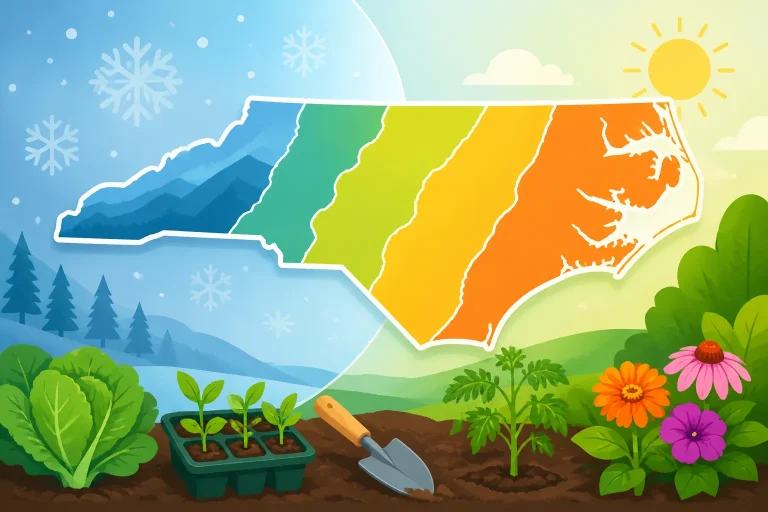
Regional differences are only the first layer. The weather changes from year to year, and a typical frost window is not a promise that frost will end on a particular day. Frost dates describe probabilities based on a location’s climate history. A low-risk date can still be followed by an unusual cold snap, while a mild stretch may arrive earlier than expected. For more context, see North Carolina Planting Dates: Frost Probabilities by Region and Why Spring Frost Dates Vary Widely Across North Carolina.
Your immediate surroundings can shift risk further. Cold air tends to settle in low ground, while a slope may drain cold air downhill. A sunny wall can warm a small bed, but it cannot guarantee that tender foliage will be safe if temperatures fall. Trees, buildings, paved areas, and wind exposure all affect how quickly a site warms or cools.
Think of regional guidance as a starting point, then check the actual planting spot. Ask whether the bed receives direct sun, whether it stays wet after rain, and whether cold air can settle around it. A regional calendar helps you narrow the options; the garden itself tells you whether conditions are suitable.
Identify what you want to plant
“Can I plant now?” has no single answer until you name the plant. Cool-season vegetables, warm-season vegetables, flowers, bulbs, trees, and shrubs have different needs. A day that suits spinach or peas may be too cold for tomatoes, basil, or other tender plants. Likewise, the best time to plant a tree is not necessarily the same as the best time to sow a vegetable bed.
Cool-season vegetables
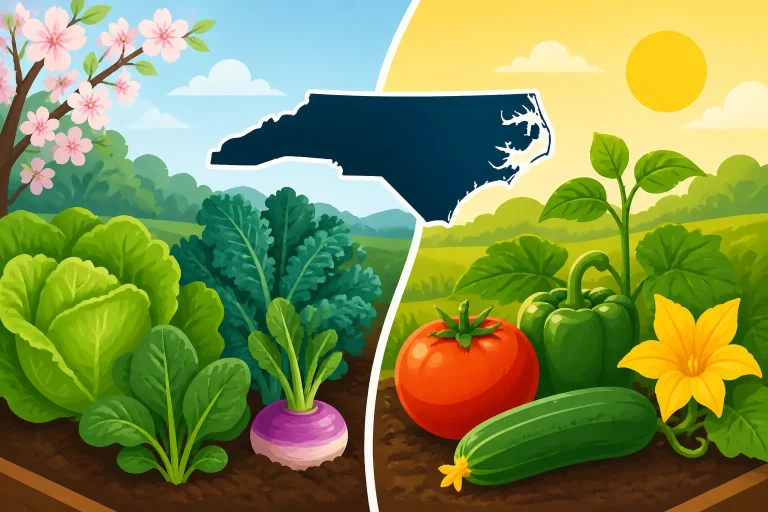
Cool-season crops grow best in the milder parts of the year. Depending on the crop and local conditions, common examples include leafy greens, peas, radishes, carrots, broccoli, cabbage, and other brassicas. Some can cope with cool air better than warm-season vegetables, but “cool-season” does not mean they are immune to every freeze or that they grow well in every chilly soil.
These crops are often candidates for planting before the warm-season garden is ready. They may also suit a fall garden, when the intense heat of summer is easing. Timing matters because some cool-season crops slow down or become less productive when temperatures rise. A seed packet or transplant label can help clarify the crop’s preferred conditions and expected time to maturity. The broader trade-offs are covered in North Carolina Cool-Season vs Warm-Season Vegetable Guide.
Warm-season vegetables
Tomatoes, peppers, cucumbers, beans, squash, and similar crops need warmer conditions than hardy greens and roots. Many are damaged by frost, and some may struggle even when frost is not in the forecast if the soil stays cold or nights remain chilly.
For these crops, a sunny day is not enough evidence that it is time to plant. Check soil warmth, recent nighttime conditions, and the forecast. A transplant that goes out too early can sit without growing, suffer cold damage, or be weakened before the weather settles. Direct-sown seeds also need suitable soil conditions to germinate and grow reliably. Waiting for Warm Soil Before Sowing Summer Vegetables in NC goes deeper into the soil-temperature question.
Flowers, bulbs, trees, and shrubs
Ornamental plants vary widely. Some annual flowers tolerate cool conditions; others are tender and should wait until cold risk has eased. Spring-flowering bulbs are generally planted in a different season from warm-season annual flowers, while many trees and shrubs are best handled when conditions favor root establishment rather than during stressful heat or drought.
Read the plant’s label or a reliable growing reference for its preferred planting season, light, soil, moisture, and hardiness. A plant suited to one part of North Carolina may not thrive in another, even if it survives the winter. Hardiness zones describe average annual extreme winter temperatures, not spring frost timing, summer heat, soil drainage, or the full growing season. If you are selecting a perennial or woody plant, Finding Your North Carolina Hardiness Zone Using USDA ZIP Codes can help you understand one part of the decision, but it should not replace checking local conditions.
A useful rule is to sort plants into three groups before you begin: those that tolerate cool weather, those that need warmth, and those whose best season depends on the species and planting form. This simple step keeps a warm spell from tempting you into putting every seedling outside at once.
Use frost risk and soil warmth together
Frost risk and soil warmth are related to timing, but they answer different questions. Frost risk helps you judge whether exposed leaves or young growth may be damaged by a cold night. Soil warmth helps you judge whether seeds and roots can start growing well. One can be favorable while the other is not.
For example, a bed may have no frost in the short-term forecast but still be too cold for a warm-season seed to germinate well. In another case, soil may feel workable, but a tender transplant could still be vulnerable to a cold night. Check both the air forecast and the bed.
A practical check before planting
- Check the short-term forecast. Look for cold nights, not just the daytime high. Forecasts are not guarantees, so use them alongside your region’s seasonal risk.
- Consider the crop’s tolerance. A crop that can handle cool conditions may be a reasonable choice when a tender crop is not.
- Check the soil where the plant will grow. Soil conditions can differ between a sunny raised bed and a shaded in-ground plot. Use a soil thermometer if you need a more dependable reading than touch can provide.
- Notice how the site behaves after rain. Soil that is waterlogged, compacted, or slow to drain may be a poor planting environment even when the temperature seems right.
- Leave room for a weather change. If a cold spell would seriously damage the crop and you cannot protect it, waiting can be the lower-risk choice.
A single afternoon’s warmth is especially misleading in late winter and early spring. Sunlight can warm the surface while deeper soil remains cool. Conversely, a bed exposed to strong sun may warm faster than a shaded corner. Judge the soil at the depth relevant to the seed or root system rather than relying on how warm the surface feels.
Cold damage does not always look dramatic immediately. Seedlings may stop growing, wilt, or develop damaged leaves after exposure. A plant that survives a cold snap may still be stressed and take time to resume growth. That is why “it did not die” is not the same as “it was planted at an ideal time.”
Frost is also not the only cold-weather concern. A light frost may affect tender foliage without freezing the soil, while a ground-level freeze can damage plants close to the surface. Wind, moisture, plant maturity, and the duration of cold all influence the outcome. How Ground-Level Freezes Impact Spring Planting in North Carolina and Which North Carolina Crops Can Tolerate Light Spring Freezes? explain why air temperature alone can be an incomplete measure.
If you are trying to plant early, choose crops with better tolerance for the conditions, use protection only when you can manage it properly, and avoid treating a forecast as a guarantee. Row covers or other protection may reduce exposure in some situations, but they need to be used appropriately and do not make every tender crop safe in every cold event. When a crop is valuable or difficult to replace, waiting for more dependable conditions is often the sensible option.
Match the planting method to the season
Planting a seed directly in the bed and moving a transplant outdoors are not interchangeable tasks. They expose the young plant to weather in different ways. Seeds must germinate under the conditions in the soil; transplants have already started growing but need to adjust to outdoor light, wind, temperature, and moisture.
Direct sowing
Direct sowing works well for crops that establish readily in the garden or do not transplant easily. It avoids the shock of moving a plant from a pot, but it makes germination dependent on conditions in the bed. Cold, saturated, crusted, or excessively dry soil can delay or disrupt emergence.
Follow the seed packet’s instructions for planting depth and spacing. Keep the seedbed consistently suitable for germination, without letting it dry out or remain waterlogged. If you sow too early, seeds may sit for a long time or emerge unevenly. If you sow too late, the crop may not have enough favorable growing weather to mature as expected.
Transplanting
Transplants can give some crops a head start, but they are not automatically ready to go outdoors as soon as they are available. Plants raised indoors need gradual adjustment to outdoor conditions, a process commonly called hardening off. This transition helps them adapt to stronger light, temperature swings, and wind.
Before setting a transplant out, check that it is healthy, not severely root-bound, and suited to the forecast and soil conditions. Water it as needed, handle the root ball gently, and avoid planting into dry or saturated soil. After planting, monitor moisture closely while roots establish. A small seedling can dry out more quickly than an established plant, especially in a windy or sunny spot.
Do not confuse hardening off with cold protection. Acclimating a plant helps it adjust to outdoor conditions, but it does not turn a tender crop into a frost-tolerant one. If cold weather is still a concern, delay the move or use suitable protection. For a fuller transition checklist, see When Is It Safe to Move Seedlings Outdoors in North Carolina?.
Buying plants versus starting seed
Buying a transplant can save time and reduce the need for indoor space, lighting, and seed-starting supplies. It can also limit your choice of crops and varieties, and a plant bought at the wrong stage or exposed to poor conditions may not establish well. Starting from seed offers more control over timing and selection, but it takes planning and attention.
Choose based on your schedule, equipment, and the crop. If the suitable outdoor window is short, a transplant may be practical. If the crop is easy to sow directly or does not transplant well, direct sowing may be better. For many gardens, a mix of methods is more useful than insisting on one approach for every crop. Direct Sowing vs Indoor Seed Starting for Early Carolina Springs compares the trade-offs in more detail.
Make seasonal choices through the year
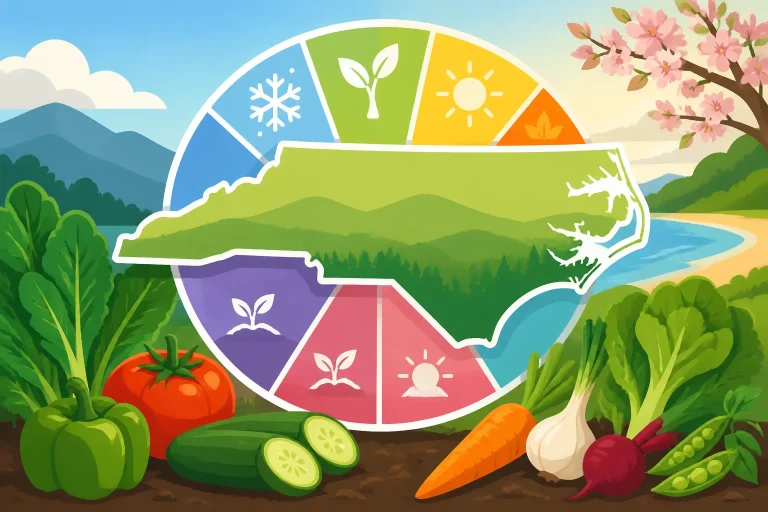
North Carolina does not have one universal planting season. A better approach is to plan around the changing conditions of the year and then adjust for your region. The patterns below describe how to think about each part of the growing cycle, not fixed statewide dates.
Late winter and early spring
This is a transition period. Cool-season crops may be suitable before tender warm-season crops, but soil can remain cold and frost risk can persist. Use regional frost probabilities as context, then check local forecasts and soil conditions. In mountain and high-elevation areas, late cold may remain a concern after warmer parts of the state have begun planting.
If you want an early start, begin with crops that tolerate cool conditions, use transplants that have been properly acclimated, or prepare the bed while waiting for warmer conditions. Avoid filling the entire garden with tender plants during the first mild spell. If a late cold snap arrives, having kept some plants back can make it easier to replace losses or extend the harvest.
Spring into early summer
As soil and nighttime conditions become more reliably warm, warm-season crops become more reasonable choices. The transition does not happen at the same moment everywhere. A sunny coastal site may warm differently from a shaded mountain plot, and even a warm regional average cannot tell you how wet or cold your individual bed is.
Plant in stages rather than putting every seed or transplant in at once. Staggering can spread risk and provide a longer harvest, especially for crops that mature quickly or produce over a period of time. Keep an eye on the crop’s expected maturity and the growing conditions ahead. A seed packet’s days-to-maturity estimate is a guide, not a promise; stress and weather can change how quickly plants develop.
Summer
Summer planting is not automatically a good idea just because frost is no longer the concern. Heat, drying soil, storms, and pests can make establishment difficult. Cool-season crops may struggle in hot weather, while new transplants may need careful attention to moisture and protection from harsh conditions.
For a summer planting, focus on the crop’s heat tolerance and how long it needs to mature. Select a site with appropriate sun and drainage, keep young plants watered, and consider whether shade during the hottest part of the day is suitable for the crop. Avoid assuming that a plant that grew well in spring will thrive if sown into midsummer conditions. Protecting North Carolina Garden Plants During Extreme Summer Heat covers ways to reduce heat stress.
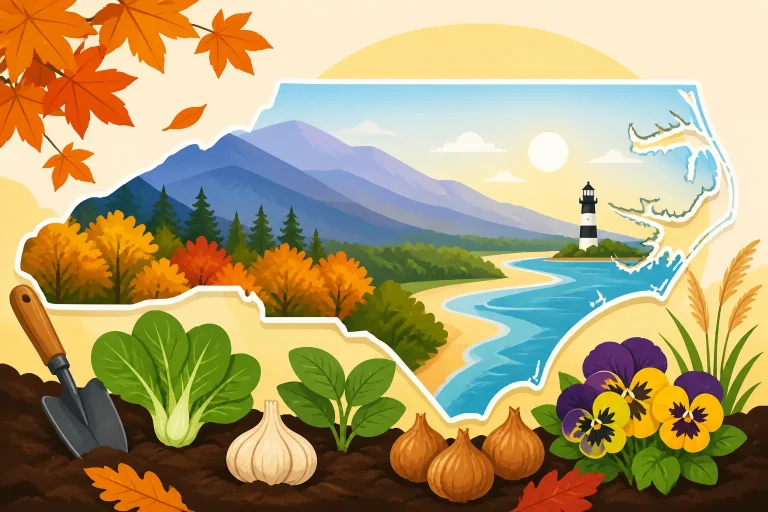
Late summer and fall
The fall garden is planned backward from the arrival of colder conditions. Start with the crop’s expected time to maturity, allow for slower growth as days cool, and account for your region’s frost pattern. A coastal bed may continue growing later than a mountain garden, but local exposure and the particular crop still matter.
Cool-season vegetables can be good candidates as the weather moderates, but starting too late can leave plants undersized when cold arrives. Starting too early can expose young plants to intense heat. Provide water and temporary shade if seedlings are vulnerable to hot weather, and keep soil from drying out during establishment.
For fall planting, think in terms of a window rather than one date. The beginning of that window may be constrained by summer heat; the end may be constrained by shortening days and frost. The balance shifts by crop and location. North Carolina Fall Planting Guide: Mountains to the Coast and Guide to Sowing Fall Vegetables and Cover Crops in NC can help you plan by season and region.
Winter
Winter is not necessarily a period when nothing can be planted, but it is a poor time to force a crop that needs active growth in warm conditions. Some garden tasks are better handled in the colder season, such as preparing beds, reviewing what worked, checking drainage, and planning future sowings. Planting trees or shrubs may be suitable at certain points in the cool season, depending on the plant and local conditions; follow species-specific guidance rather than applying vegetable timing to woody plants.
In any season, be alert to periods of unusually wet or dry weather. A calendar may say that a crop is in season, yet the garden may be too wet to work without damaging soil structure or too dry for a seedbed to establish. If conditions are poor, postponing a few days can be more useful than planting into a bed that is likely to cause problems.
Prepare the site before putting plants in
Good timing cannot compensate for a poorly prepared site. Before planting, check the bed’s light, soil condition, drainage, and space. These basic checks help prevent problems that can be mistaken for bad timing later.
Check light and space
Observe the bed through the day, not just at the moment you plan to plant. Buildings and trees cast moving shade, and the amount of sun can change as the season progresses. Match the plant to the site’s light needs. Crowded plants compete for light, water, and air movement, so use the spacing guidance on the seed packet or plant label rather than fitting in as many plants as possible.
Think about mature size, too. A small transplant can grow into a large plant that shades its neighbors or blocks access to the bed. Plan paths and supports before planting crops that spread, climb, or become heavy with fruit.
Check soil texture and drainage
Soil that holds water for too long can leave roots short of oxygen and increase the risk of root problems. Very sandy soil may dry quickly and need more frequent attention. Clay soil can be workable when it is moist but may compact if dug while wet. A quick inspection after rain can reveal whether water drains away or sits on the surface.
Avoid working soil when it is saturated. Tilling or digging wet soil can damage its structure and create clods that are difficult to break up later. If the bed is not in good condition, it may be better to wait and improve it before sowing. The site checklist in Four Site Checks to Complete Before Planting Your North Carolina Bed is a helpful companion.
Check soil fertility and acidity thoughtfully
Do not assume that every bed needs fertilizer or lime. Soil conditions vary, and unnecessary amendments can create imbalances rather than solve a problem. If a crop is performing poorly, consider whether the cause may be shade, water, temperature, drainage, or pests before adding products.
For fertilizer, follow the product label, which is the legal instruction for use. For questions about soil acidity or nutrients, consult the appropriate soil-testing or extension resources for your location and follow their directions. Avoid adding amendments to planting holes by guesswork, especially around trees and shrubs.
Water for establishment
Newly planted seeds and transplants need attention while roots develop. The surface of a seedbed can dry quickly, while a container or raised bed may lose moisture faster than nearby in-ground soil. Check the soil rather than relying only on a fixed watering schedule. A light sprinkle may wet the surface without reaching the roots; very frequent watering can also leave some soils too wet.
Watering needs change with soil texture, weather, plant size, and exposure. After planting, check moisture at the depth where the roots are growing and adjust based on what you find. Watering North Carolina Gardens: Weekly Infiltration vs Schedules explains why observing water movement is more reliable than applying a rigid schedule.
Make a low-risk decision when conditions are uncertain
Sometimes the forecast is unsettled, the soil is borderline, or you are unsure whether a plant can handle the conditions. You do not need to choose between planting everything and doing nothing. A small test planting, a staggered schedule, or a short delay can help manage uncertainty.
Use these options when timing is unclear:
- Plant the hardier crop first. Choose a crop that better fits current conditions instead of using a tender one as a test.
- Plant a small section. If conditions turn out well, you can add more later. If not, the loss is limited.
- Stagger sowing. Plant some now and hold some seed or transplants for a later opportunity.
- Use a container for a small trial. A container may be easier to move or protect, although it can dry out faster than garden soil.
- Wait for a better forecast. Waiting is a valid gardening decision, particularly if a cold snap or heavy rain is likely.
- Keep replacement plants or seed in reserve. This is useful when the crop is important and the season still allows another attempt.
Keep simple notes about sowing dates, weather, crop response, and the garden location. Over time, those records can help you recognize which beds warm early, where frost lingers, and which crops suit your schedule. Notes are especially useful when your yard has multiple microclimates: a sunny raised bed near the house may behave differently from a low, shaded bed at the back of the property.
If a crop fails, do not assume timing was the only cause. Check whether seeds germinated, whether seedlings were chewed or damaged, whether the soil was too wet or dry, and whether the plant received suitable light. A quick diagnosis can prevent repeating the same problem in the next planting. Managing Soil, Sun, and Pests in North Carolina Vegetable Gardens is useful when you need to look beyond the calendar.
A dependable decision sequence is simple: identify the crop, identify your region, check the forecast and soil, inspect the site, then decide whether to plant, protect, or wait. This process is more reliable than using a holiday or a statewide date as a universal signal. If you want a broader month-by-month view, Month-by-Month Vegetable Planting in North Carolina can help you connect seasonal planning with crop choices.
Frequently Asked Questions
Can I plant vegetables in North Carolina right now?
It depends on your region, crop, soil, and short-term forecast. Cool-tolerant crops may suit conditions that are still too risky for tender warm-season vegetables. Check the bed and the plant’s requirements before deciding.
Is it safe to plant after the last frost date?
A typical frost date is a probability, not a guarantee. Cold can still occur after a commonly used date, and conditions vary between yards. Consider the crop’s frost tolerance, local forecast, and soil warmth.
Can I plant tomatoes as soon as the weather feels warm?
Not necessarily. Warm afternoons do not guarantee warm soil or mild nights. Wait until conditions suit the crop and use local forecasts rather than judging readiness by daytime warmth alone.
Should I plant seeds or transplants?
Choose the method that suits the crop and your schedule. Direct sowing avoids transplant shock but depends on suitable soil for germination. Transplants can save time but need to be healthy, properly acclimated, and planted when outdoor conditions are suitable.
What should I do if a cold snap is forecast after planting?
Check which plants are vulnerable and follow reliable guidance for protecting them. If you have not planted yet and the crop is tender, waiting may be safer. Protection can reduce risk, but it does not guarantee that plants will avoid damage.
Disclaimer
This article is for general informational purposes only and does not constitute professional advice. Laws, prices and regulations vary by location and change over time. Consult a qualified professional for guidance on your specific situation. North Carolina Gardening Guide is not a government agency and is not affiliated with any university extension, state department of agriculture or other government agency.