Spring Planting in North Carolina: Cool vs Warm-Season Crops
North Carolina’s spring planting season is not a single date: coastal beds can warm while mountain gardens still face cold nights. Knowing which crops tolerate cool conditions—and which need warm soil and frost-free weather—helps you plant with less risk. This guide explains how to sort crops by season, adjust for region and site, and make timing decisions using local conditions rather than a statewide calendar.
Cool-season and warm-season crops are different kinds of bets
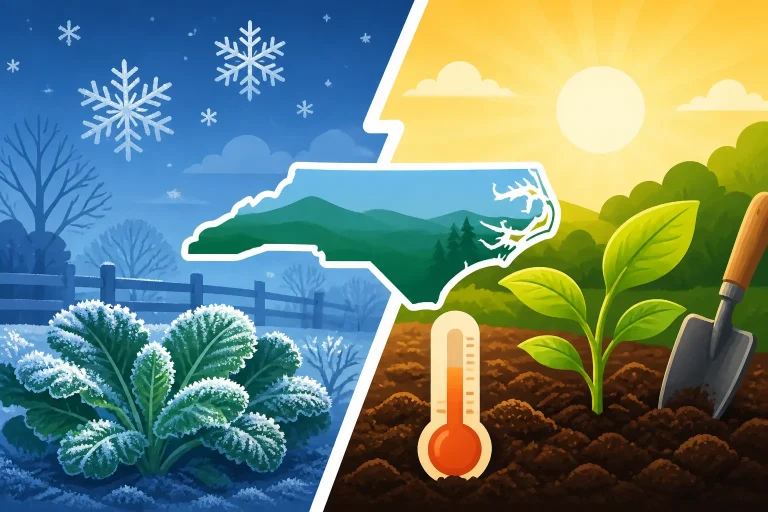
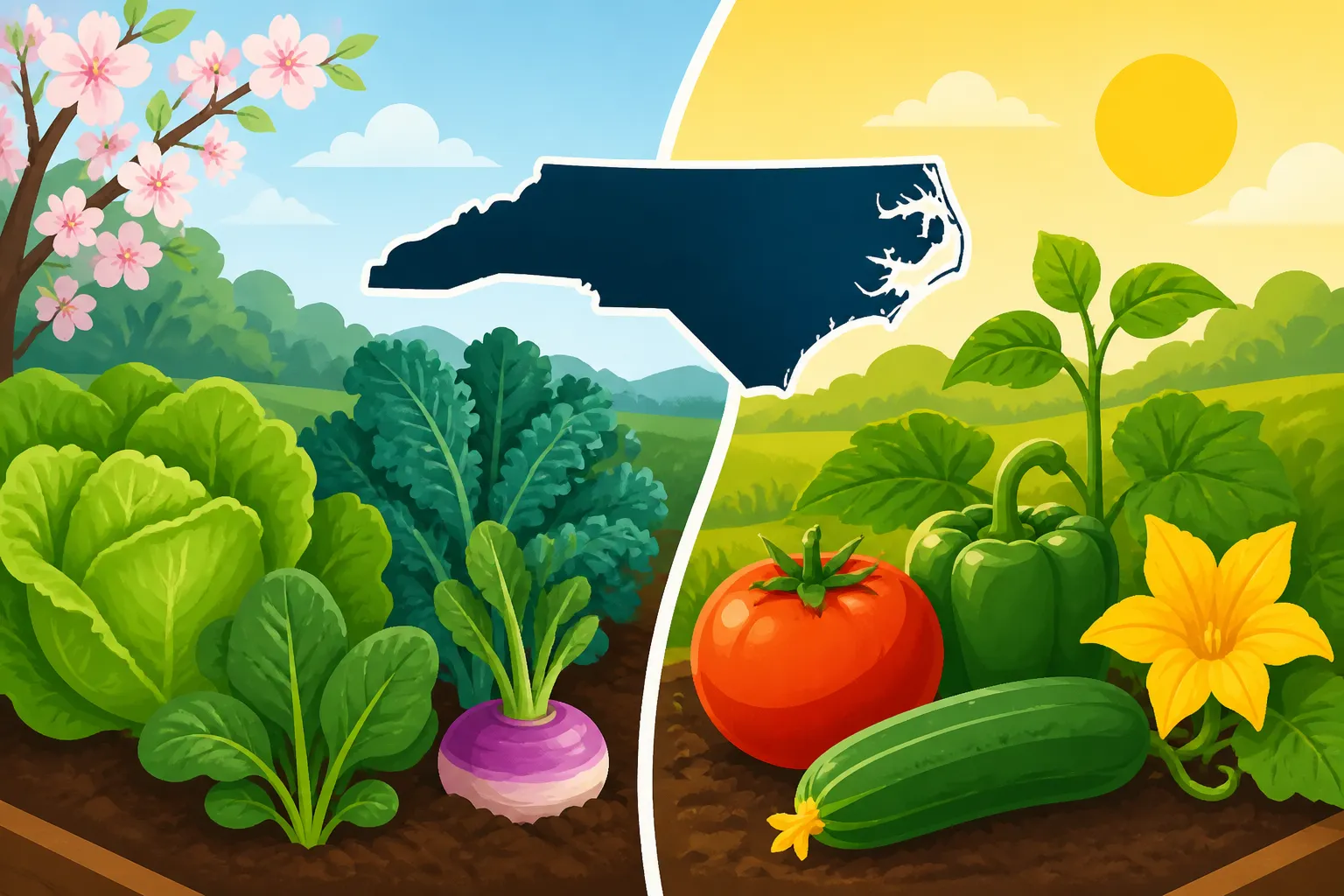
The most useful starting point is not a particular month. It is the crop’s temperature tolerance. Cool-season vegetables grow well in the milder conditions of early spring and can often handle some cold. Warm-season vegetables need warmer soil and air, and many are damaged by frost.
That distinction affects more than survival. A crop planted in the wrong conditions may germinate slowly, grow poorly, bolt, or produce a disappointing harvest even if it does not die. A successful spring plan therefore combines the crop’s needs with the conditions in your own garden.
Cool-season crops
Cool-season crops include leafy greens, root vegetables, peas, and many members of the cabbage family. Common examples include lettuce, spinach, kale, collards, radishes, carrots, beets, peas, broccoli, and cabbage. Their seeds and young plants are generally better suited to cool conditions than tender summer crops.
“Cool-season” does not mean that every crop is unaffected by cold. A light frost may be tolerable for some established cool-season plants, but cold tolerance varies by crop, plant age, exposure, and the severity and duration of a freeze. Newly emerged seedlings and recently transplanted starts may be more vulnerable than established plants. For a closer look at crop differences, see Which North Carolina Crops Can Tolerate Light Spring Freezes?
Cool conditions can also be temporary. As spring advances, rising temperatures and longer days may cause some leafy crops to bolt, or send up a flowering stalk. The leaves can become tougher or more bitter, and the harvest window may shorten. That is one reason to sow cool-season crops in stages rather than planting every seed at once.
Some cool-season vegetables are better started as seeds in the garden; others are often planted as transplants. The choice depends on the crop and how much time it needs to establish. Peas and many root crops are commonly direct-sown because they do not transplant as easily as some other vegetables. Broccoli and cabbage are often grown from transplants, although the best approach depends on your timing and preference. See Direct Sowing vs Indoor Seed Starting for Early Carolina Springs for a closer comparison.
Warm-season crops
Warm-season crops include tomatoes, peppers, eggplant, beans, cucumbers, squash, corn, and many melons. They need warmer soil to germinate or establish well, and tender plants can be seriously damaged by frost. Planting them early does not necessarily give you an earlier harvest: cold, wet soil can stall growth, and a late cold snap can injure or kill plants.
Some warm-season crops are typically sown directly outdoors, while others are commonly started indoors or purchased as transplants. Beans, corn, cucumbers, squash, and melons are often direct-sown once conditions are warm enough. Tomatoes, peppers, and eggplant are often transplanted, but the plants still need a suitable outdoor environment after planting.
The phrase “after the last frost” can be misleading if treated as a guarantee. Frost dates describe probabilities, not a promise that frost cannot occur afterward. Regional averages can help with planning, but your garden may have a different exposure or elevation from the weather station used for a date. For how temperature and soil conditions fit together, see Frost Dates vs Soil Warmth: When to Plant in North Carolina.
| Crop group | Common examples | Typical spring approach | Main timing concern |
|---|---|---|---|
| Cool-season greens | Lettuce, spinach, kale, collards | Sow seeds or set out suitable transplants while conditions are cool | Heat and long days can shorten the harvest window |
| Cool-season roots | Radishes, carrots, beets | Usually direct-sow into prepared soil | Cold, wet, crusted, or compacted soil can interfere with emergence |
| Cool-season brassicas | Broccoli, cabbage | Often grown from transplants; some crops can also be started from seed | Young plants may need protection during a hard cold snap |
| Peas | Snap, snow, or shelling peas | Usually direct-sow in cool conditions | Heat can limit flowering and production |
| Tender summer crops | Tomatoes, peppers, eggplant | Commonly transplanted after conditions are suitable | Frost and cold soil can damage or stall plants |
| Warm-season direct-sown crops | Beans, cucumbers, squash, corn | Sow outdoors after the soil and weather have warmed | Early sowing into cold soil may lead to slow or uneven emergence |
Use region, elevation, and site to adjust the calendar
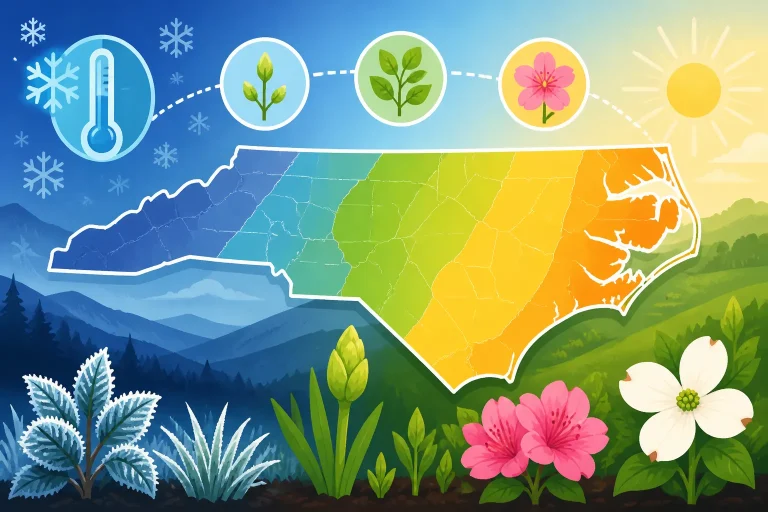
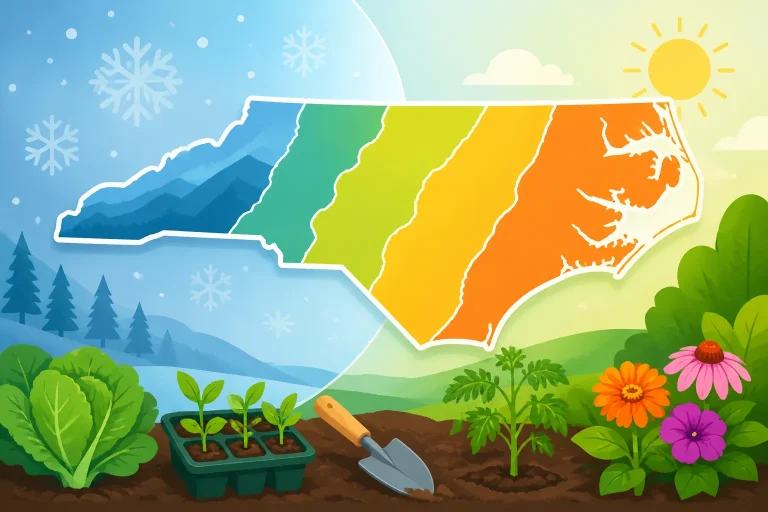
North Carolina stretches from the coast through the Piedmont to the mountains. Those regions do not warm at the same pace, and even nearby gardens can differ. A sunny bed that drains well may be ready before a shaded, wet bed. A garden at higher elevation can remain cool after a lower site nearby has begun to warm.
For this reason, a statewide planting date is best treated as a starting point, not an instruction for every yard. Compare your local climate and garden conditions with the crop’s needs. North Carolina Planting Regions: Coastal, Piedmont, or Mountain? explains the broad regional differences, while How Elevation and Geography Shift North Carolina Planting Calendars covers why location can change the timing further.
Coastal Plain
The Coastal Plain often enters spring warmth earlier than inland or higher-elevation areas, but that does not eliminate cold snaps. Near the coast, local conditions can also differ from inland parts of the same broad region. A warm spell may make it tempting to set out tender crops, but check the forecast and soil conditions rather than relying on a stretch of sunny afternoons.
Cool-season vegetables can establish in the milder part of spring, but they may face rising heat sooner than gardeners in cooler areas. A succession approach—sowing a portion of the bed, then sowing another portion later—can spread the harvest and reduce the chance that all plants mature during a hot spell. The Coastal Plain’s long growing period may also make room for additional planting cycles, but those depend on crop maturity and local conditions. See Coastal Plain Vegetable Calendar: Maximizing the Long Growing Year for regional planning.
Piedmont
The Piedmont’s spring weather can shift quickly. Warm afternoons do not rule out cold nights, and soil may stay cool or wet after rain. A protected urban or suburban garden may warm earlier than a low, exposed, or shaded site in the same area.
For early planting, focus on crops suited to cool conditions and avoid treating the first warm spell as a signal to plant every summer vegetable. When setting out tender plants, consider both the forecast and the bed’s actual temperature. A calendar can suggest when to begin checking conditions, but it cannot account for every yard.
Mountains and higher elevations
Mountain gardens often have a later and shorter warm-season window than lower sites. Elevation, slope, exposure, and cold-air drainage all matter. A sheltered south-facing bed may warm earlier than an exposed garden at a similar elevation, while a low spot can collect cold air on clear nights.
Cool-season crops are often a practical way to use spring conditions in mountain areas. Warm-season crops may need careful timing so they have enough suitable weather to mature. That does not mean every mountain garden follows the same schedule: local exposure and the crop’s maturity time make a difference. For region-specific concerns, see Western NC Mountain Spring Planting: Navigating Late-April Freezes and Safe Sowing Dates for Mountain Warm-Season Vegetables.
Your garden’s microclimate
A weather station’s conditions are not identical to those at every bed. Before planting, note where frost lingers, where sun reaches the soil first, and where water drains slowly. Raised beds may warm and drain differently from in-ground soil, though they can also dry out faster. Walls and paved areas can create warmer pockets, while shade and wind exposure can make a bed cooler.
Keep a simple record of planting dates, temperatures, and results. Over time, it can show whether a certain bed tends to warm early, whether a low corner is vulnerable to frost, and which crops are reliable at your site. The record does not replace a forecast, but it makes general guidance more useful.
Check soil and weather before planting
A calendar helps you narrow down a window. Soil and weather checks help you decide whether to plant today. These checks are especially important for warm-season crops, which can struggle when planted into cold, wet ground.
Look at the soil, not just the afternoon temperature
Air temperature can rise quickly on a sunny day while the soil remains cold. A soil thermometer can help you track the temperature in the planting area. Follow the seed packet or reliable crop-specific guidance for the temperature range a particular seed needs. Do not assume that one warm reading means the whole bed is ready; soil temperatures can vary with depth, shade, and recent weather.
Soil moisture matters too. Working or planting very wet soil can leave it compacted or cloddy, making it harder for roots to grow and seeds to emerge. If soil sticks heavily to tools or smears when handled, waiting for it to drain may be better than rushing to plant. On the other hand, dry, poorly prepared soil can also make it difficult for seeds to establish. Prepare a workable seedbed and maintain suitable moisture after sowing.
When deciding whether to plant summer vegetables, pay attention to both soil warmth and the forecast. Warm-season seeds may rot or emerge unevenly in cold, saturated soil, and tender transplants may stall after cold nights. Waiting for Warm Soil Before Sowing Summer Vegetables in NC goes into that decision in more detail.
Read the forecast for the next several nights
A sunny day can make conditions seem settled, but overnight lows and the chance of frost matter to young plants. Check a local forecast before sowing or transplanting, especially if you are planting tender crops. A forecast is not a guarantee, so leave room for uncertainty rather than planning right at the edge of a likely cold event.
Cool-season crops may tolerate conditions that would damage tender summer crops, but tolerance is not absolute. Newly transplanted starts can be stressed by wind, cold, or a sudden change in conditions. If cold weather is forecast, consider delaying a vulnerable planting or protecting it with an appropriate cover. Covers can reduce exposure, but their protection depends on the material, how securely it is used, and the conditions outside. Remove or adjust protection when needed so plants are not overheated or left in unsuitable conditions.
Prepare the bed before sowing
Clear weeds and old plant debris, and make sure the planting area drains adequately. Break up large clods and prepare a seedbed suited to the crop. Smaller seeds generally need a fine, even surface so they make good contact with moist soil. Follow packet instructions for planting depth and spacing instead of using one depth for every crop.
Avoid crowding plants to compensate for a short growing window. Overcrowding can restrict airflow and make it harder for plants to reach light, water, and nutrients. Leave enough room for mature plants, and thin seedlings when the crop requires it. If you are improving an in-ground bed, focus on soil structure and drainage rather than adding materials without a reason. The details in How to Prepare North Carolina Bed Soil and Suppress Weeding can help with bed preparation.
Plan spring plantings in stages
Planting everything on the first suitable day creates one large timing risk. A staged plan spreads that risk and can keep the garden productive as temperatures change. It does not require complicated calculations; the basic idea is to match each crop to the conditions it prefers and avoid putting the whole season’s success on one planting date.
Start with crops suited to current conditions
If the bed is still cool, begin with suitable cool-season crops rather than trying to push tender summer crops. Choose a crop that fits the space, the time available, and how your household uses vegetables. A small planting that you can care for well is often more useful than a large bed sown all at once.
Use seed packets and crop-specific advice to check sowing depth, spacing, maturity information, and temperature requirements. “Days to maturity” is an estimate, not a promise of a harvest on a precise date. Weather, moisture, soil conditions, and the way maturity is measured can affect the actual schedule. For guidance on matching those estimates to local conditions, see How to Match Vegetable Maturity Days to Local Growing Seasons.
Sow cool-season crops more than once
For crops that can be harvested over a period, sowing a portion of a row or bed at intervals can spread production. This is called succession planting. It can be especially useful for crops that mature quickly or lose quality as warmer weather arrives.
Succession planting is not equally useful for every crop. The crop’s preferred temperature range, the time left before summer heat, and your ability to keep the bed watered all affect the result. A late sowing of a cool-season crop may have little time to mature if temperatures rise quickly. Keep the next sowing modest until you know how the first planting is performing. Succession Planting Timelines for Year-Round North Carolina Harvests offers more ways to stagger plantings.
Set out transplants gradually
A transplant that has been growing indoors or in a protected setting needs time to adjust to outdoor conditions. Gradually exposing it to outdoor sun, wind, and temperature changes can reduce transplant shock. This adjustment period is often called hardening off. Follow crop-specific instructions and avoid setting tender plants out just before a cold snap or a spell of harsh weather.
After transplanting, water the root area appropriately and check the plants often as they settle in. Wilting can result from several causes, including transplant stress, dry soil, excessive moisture, or root damage; adding more water automatically is not always the answer. Check the soil before watering and make sure the planting area drains.
Planting depth also matters. Some transplants can be set deeper than they grew in a pot, while others should be planted at about their previous soil level. Follow reliable crop-specific guidance rather than applying one rule to every vegetable.
Leave space for warm-season crops
Do not feel obliged to fill every bed early in spring. Space reserved for a warm-season crop is not wasted if the conditions are not ready yet. You can use the time to prepare trellises, labels, irrigation, or supports, and to remove weeds before the crop goes in.
If a warm-season planting is delayed, choose a crop and variety with a maturity period that fits the remaining season. A later planting may still be productive, but it is not guaranteed to catch up. Local conditions and the variety’s needs matter. Fast-Maturing Crops to Sow When You Start Late in North Carolina can help when the spring window has moved on.
Avoid the spring planting mistakes that waste time
A few common habits can undermine an otherwise sound planting plan. The solution is usually not a more complicated calendar; it is a better match between the crop, the site, and current conditions.
Treating a holiday or date as a guarantee
A date remembered from a neighbor, family member, or previous year may not apply to your garden. North Carolina’s regions and microclimates differ, and frost dates are probabilities. Even a useful average does not rule out an unusual cold event.
Use local frost information as one planning tool, then check the forecast and the garden. If you want a broader seasonal overview, North Carolina Spring and Fall Planting Schedule Overview and Why Holiday Planting Rules Fail for North Carolina Gardeners explain why fixed-date shortcuts can mislead.
Planting tender crops after one warm spell
A warm week can be followed by colder nights. Tomatoes, peppers, beans, and other tender crops can be damaged by frost, and cold conditions can delay growth even when freezing temperatures are not expected. Wait for a more dependable pattern and suitable soil conditions rather than treating a brief warm spell as the start of summer.
If plants are already in the ground and cold weather is approaching, assess the forecast and the crop’s vulnerability. A temporary cover may help in some situations, but protection is not a guarantee. Protecting Tender Crops During Late North Carolina Spring Freezes covers ways to think through that risk.
Assuming every cool-season crop can take a freeze
Cold tolerance differs by crop and growth stage. A mature, cold-tolerant plant may handle a light frost that harms a newly emerged seedling or a tender transplant. Exposure also matters: wind, soil moisture, the length of the cold period, and whether the garden is sheltered can all affect damage.
If a cold night is forecast, protect vulnerable plants where practical and check them afterward before removing damaged growth. Some plants recover from limited injury; others may be lost. Avoid making a quick diagnosis from a wilted appearance alone, because cold, water stress, and transplant shock can look similar.
Sowing too much at once
A full bed of one fast-maturing crop can create more produce than you can use, while a single planting of a crop that bolts quickly may provide only a short harvest. Start with a manageable quantity, observe how it performs, and use later sowings to adjust. A planting record helps you remember which timing worked, instead of relying on memory from a season with different weather.
Ignoring drainage and watering
Spring rain can leave beds saturated, while a sunny stretch can dry the surface quickly. Seeds need suitable moisture to germinate, but waterlogged soil can limit root growth and encourage problems. Check below the surface before watering, and consider whether water is draining away or pooling.
Different beds and containers dry at different rates. Newly planted seeds and transplants may need closer attention than established plants, but watering should respond to the soil rather than a fixed schedule. For more on applying water to beds, see Watering North Carolina Gardens: Weekly Infiltration vs Schedules.
A simple decision sequence
Use this short sequence whenever you are unsure whether to plant:
- Identify whether the crop is cool-season or warm-season, and check its specific instructions.
- Consider your region, elevation, bed exposure, and drainage.
- Check soil conditions and, for warm-season crops, whether the soil has warmed sufficiently.
- Review the forecast, especially overnight lows and frost risk.
- Plant a manageable amount, then keep notes on emergence, growth, and harvest.
Frequently Asked Questions
Can cool-season vegetables be planted before the last spring frost?
Many cool-season crops can be planted in cool weather, and some tolerate a light frost. That does not mean every crop or seedling is safe from every freeze. Check crop-specific guidance and consider the forecast, plant age, and site exposure.
Should tomatoes and peppers go out as soon as afternoons feel warm?
Not necessarily. Warm afternoons do not show whether the soil is warm enough or whether nights will remain suitable. Check the soil and forecast, and wait until conditions are appropriate for the crop.
Is a regional planting calendar still useful?
Yes. A regional calendar can narrow the likely planting window and help you plan. Use it alongside local weather, soil conditions, and the characteristics of your own garden rather than treating a date as a guarantee.
What if spring planting is delayed?
Choose crops that fit the conditions and the remaining growing period, and check maturity information before sowing. A delayed planting can still succeed, but the crop and variety need enough time to grow under local conditions.
Disclaimer
This article is for general informational purposes only and does not constitute professional advice. Laws, prices and regulations vary by location and change over time. Consult a qualified professional for guidance on your specific situation. North Carolina Gardening Guide is not a government agency and is not affiliated with any university extension, state department of agriculture or other government agency.