Frost Dates vs Soil Warmth: When to Plant in North Carolina
North Carolina gardeners often face two different planting signals: the risk of a late frost and the temperature of the soil. A calendar can help narrow the window, but it cannot tell you whether a tender crop is ready for your bed. Use frost probabilities to judge exposure and soil warmth to judge crop readiness, then adjust for your region and garden site.
Why Frost Dates and Soil Warmth Tell Different Stories
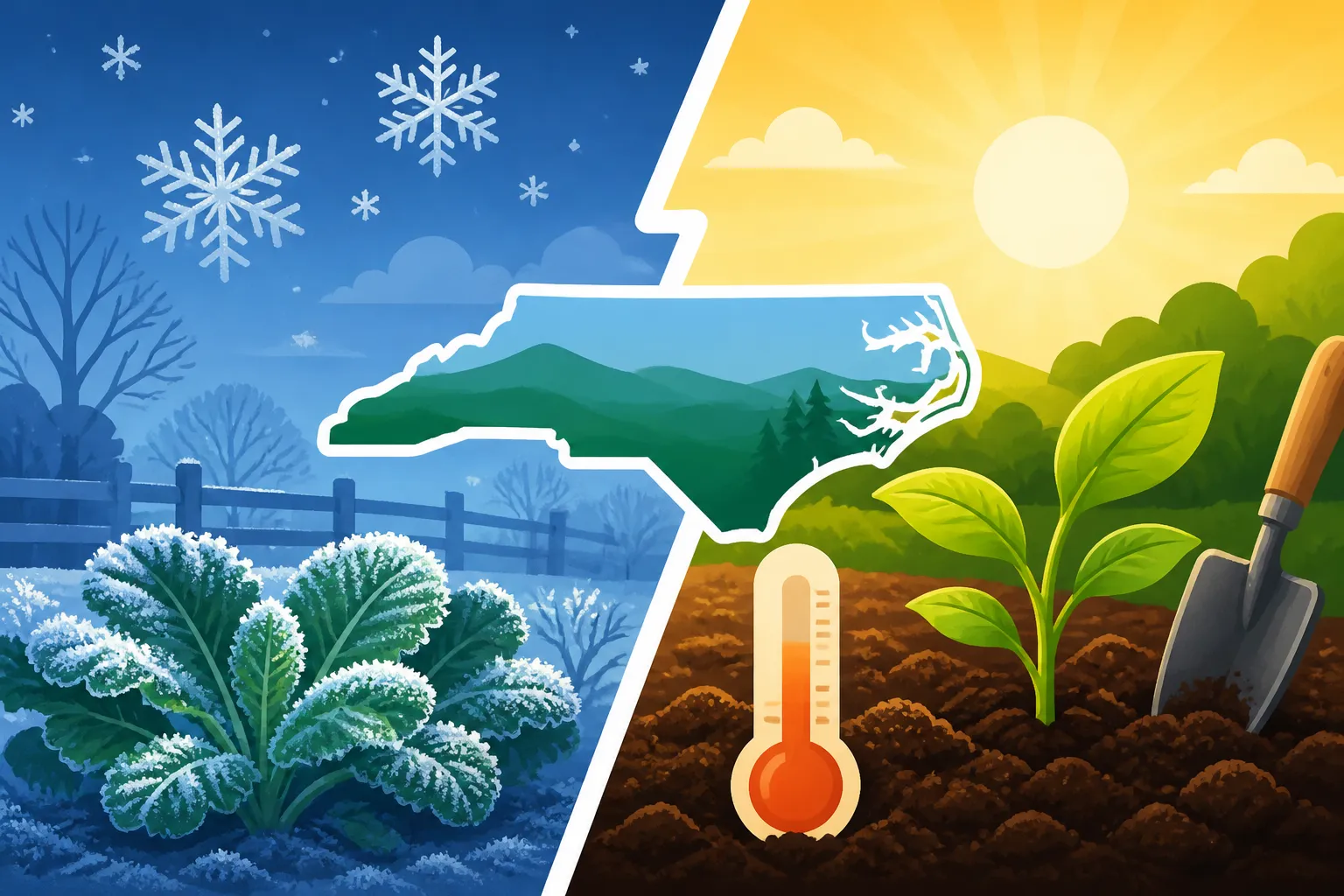
A spring frost date estimates when the risk of freezing weather declines. Soil temperature tells you whether seeds and roots have suitable conditions for growth. These are related, but they are not interchangeable.
A frost forecast matters most for plants whose leaves or stems can be injured by freezing. Soil warmth matters most for seeds that may germinate poorly, rot, or grow slowly in cold ground. A warm afternoon does not prove the soil has warmed enough, just as a frost-free night does not prove a bed is ready for every crop.
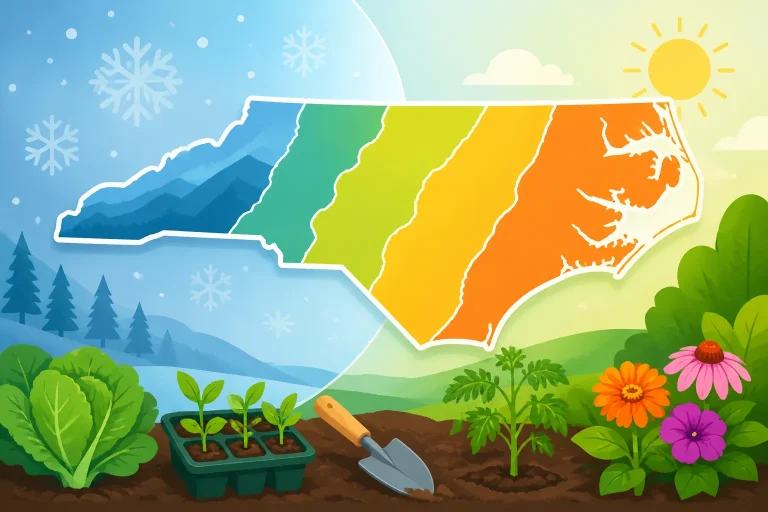
This distinction is especially important in North Carolina. The state spans coastal areas, the Piedmont, foothills, and mountains. Their weather patterns, elevations, and local landscapes differ, so two gardeners can face different planting conditions even when they are looking at the same calendar date. The North Carolina Planting Regions: Coastal, Piedmont, or Mountain? overview can help you identify the broad regional pattern for your garden.
Frost dates are probabilities, not promises
A published last spring frost date is a probability estimate based on observations from a weather station or period. It does not mean frost cannot happen afterward. A date associated with a higher chance of a freeze is more conservative than one associated with a lower chance, but neither guarantees the weather in a particular yard.
The date is also only as representative as its station and location. An airport station, for example, may not reflect a low spot, a sheltered courtyard, a ridge, or a garden beside a building. Use a regional estimate as a planning tool, then watch local conditions and your own site.
For help interpreting regional estimates, see North Carolina Planting Dates: Frost Probabilities by Region. The key is to treat the date as one part of a decision, not as a signal to move every seedling outdoors at once.
Soil can lag behind the air
Air temperature changes quickly. Soil changes more slowly, and it does not warm evenly through the garden. A sunny, raised bed may warm sooner than a shaded, wet bed. Soil near a south-facing wall may warm faster than an exposed bed, while a low area that holds moisture can remain cool.
The depth of a reading matters too. The surface can feel warm while the root zone remains chilly. Seeds are planted at different depths, and newly set transplants depend on the soil around their roots. A soil reading is most useful when it reflects the depth and location where the crop will actually grow.
A safe frost window can still be too cold for a crop
Cold-tolerant crops can often be planted while chilly conditions remain, especially when the crop is established gradually and the soil is workable. That does not mean every cool-season crop will thrive in every cold, wet bed. Slow growth, uneven emergence, and root stress can still be problems.
Warm-season crops have a different set of needs. Many are sensitive to cold soil and chilly nights, even if the immediate forecast looks frost-free. A calendar-based “last frost” date may therefore be too early for direct-sowing heat-loving seeds or setting out tender transplants.
For crop-by-crop context, North Carolina Cool-Season vs Warm-Season Vegetable Guide explains why the planting window depends on what you are growing, not just on the season.
Use Two Clocks for Every Planting Decision
A useful planting plan considers two clocks at once:
- The frost-risk clock: How likely is a damaging freeze at this location, and how vulnerable is the crop?
- The soil-warmth clock: Is the soil at the crop’s planting depth warm enough for reliable germination or root establishment?
Some crops are governed more by one clock than the other. A hardy leafy green may tolerate cool air and cool soil better than a tender bean seed. A tomato transplant may survive a brief cool spell but stall in cold ground. The right choice depends on the crop, its stage, and the conditions it will face after planting.
| Planting situation | Frost risk to consider | Soil condition to check | Practical approach |
|---|---|---|---|
| Direct-sown cool-season crop | Whether the crop can handle expected chills or light frost | Whether the bed is workable and not cold and saturated | Sow when the crop’s requirements and local conditions align |
| Direct-sown warm-season crop | Late freezes are usually not the only concern | Soil warmth at seed depth is central to germination | Wait for sustained warming rather than relying on a calendar date |
| Cool-season transplant | Whether foliage may be exposed to freezing weather | Whether roots can establish in moist, aerated soil | Harden plants and be ready to protect vulnerable transplants |
| Tender transplant | Freeze exposure and chilly nights | Warmth around the root ball and nearby soil | Delay setting out until both air and soil conditions are favorable |
| Container-grown plant | The container can cool or warm faster than garden soil | Root-zone temperature and moisture can change quickly | Acclimate gradually and monitor containers closely |
This table is a framework, not a substitute for crop-specific instructions. Seed packets and transplant information can give useful guidance about preferred conditions and maturity. If guidance conflicts with the weather in your yard, pause and reassess rather than treating either source as an absolute guarantee.
Direct seeding and transplanting are different decisions
Direct-sown seeds experience the bed’s conditions from the start. Cold, wet soil can slow germination, leaving seeds exposed for longer to rot, pests, or uneven moisture. A transplant already has a developed root system, but moving it outdoors can still shock it. Its leaves may be damaged by frost or wind, and its roots can struggle in cold soil.
That is why starting indoors does not eliminate the need to assess outdoor conditions. A seedling can look ready on a windowsill and still need more time before it can handle a garden bed. Direct Sowing vs Indoor Seed Starting for Early Carolina Springs compares the trade-offs, while When Is It Safe to Move Seedlings Outdoors in North Carolina? focuses on acclimation and readiness.
Plant according to crop tolerance, not garden-wide averages
A mixed vegetable garden rarely has one perfect planting date. You might sow a cold-tolerant crop in one bed while waiting to plant a tender crop in another. That staggered approach reduces the risk of losing the whole garden to a cold snap and makes better use of beds as conditions change.
Group crops by their tolerance and needs. Keep early plantings of hardy crops separate from heat-loving crops if that helps you cover, water, or monitor them differently. Avoid using the success of one crop as evidence that all others are ready. A crop that sprouts in cool soil may not predict how a tender crop will respond.
Read Frost Probabilities in the Context of Your Garden
Frost estimates are most useful when you understand what they can and cannot tell you. They help you weigh risk; they do not forecast the exact conditions in your yard. In North Carolina, the difference between a broad regional estimate and a particular garden can be meaningful.
Choose a relevant weather reference
When comparing frost information, look for the station or area represented and consider how similar it is to your garden. Elevation, proximity to large bodies of water, terrain, and urban surroundings all influence local conditions. A station may offer a useful starting point without matching your site exactly.
The Why Spring Frost Dates Vary Widely Across North Carolina article explains why statewide averages can mislead gardeners. For a closer look at how observed freeze records differ from general calendar expectations, see Using Weather Station Freeze Normals to Schedule Spring Sowing and Using the State Climate Office Tool to Track Local Freeze Records.
Do not average several different sources into a precise date that none of them actually supports. Instead, use the relevant estimate to define a cautious planting window. If you garden in an exposed or cold-prone location, allow more room for uncertainty than you might in a sheltered site.
Notice how your yard collects or loses cold
Cold air tends to settle in low areas, while exposed ridges can experience stronger wind. Walls, fences, dense plantings, and nearby structures can change how a bed holds heat, but they do not make a garden immune to frost. A small garden can contain several microclimates: a sunny edge, a shaded corner, a low patch, and a sheltered spot near a building.
Watch where frost lingers longest after a clear, cold night. Notice which areas warm early in the morning and which remain damp or shaded. These observations help you decide where to place early crops and which beds deserve extra caution. They do not replace forecasts, but they make general forecasts more useful.
Match the risk to the crop
A light frost and a hard freeze do not affect every plant equally. A hardy, established crop may tolerate conditions that injure a tender transplant. Young seedlings are often more vulnerable than vigorous plants with established roots. Flowering or fruiting stages can also change how much damage matters to the harvest.
Before planting, ask:
- Is the crop considered cold-tolerant or tender?
- Is it a seed, a small seedling, or a more established transplant?
- Will its edible part be affected if the leaves or flowers are damaged?
- Can you cover the bed or move a container if cold weather returns?
- Is the planting likely to recover if growth pauses?
If you are unsure about a crop’s response, choose a less exposed bed or wait for a more favorable window. Which North Carolina Crops Can Tolerate Light Spring Freezes? provides a useful reference for distinguishing more tolerant crops from vulnerable ones. For tender plants already in the ground, Protecting Tender Crops During Late North Carolina Spring Freezes covers ways to reduce exposure.
Check Soil Warmth Before Sowing or Transplanting
A soil thermometer is a useful tool when timing warm-season vegetables, but it does not need to become a complicated ritual. The goal is to measure conditions where the seed or root will be, at a consistent time and location.
Take a representative reading
Pick a spot in the bed that reflects the planting area rather than an unusually warm edge beside a wall. Measure at the depth relevant to the crop, following the thermometer’s instructions. Take readings in more than one location if the bed varies in sun, shade, or moisture.
For a practical comparison, measure at roughly the same time of day across several days. A single warm afternoon can be misleading after a cold night or a run of chilly weather. When conditions fluctuate, a short trend tells you more than one isolated number.
Avoid measuring only the sunniest patch if the seeds will be sown in a shaded row. Likewise, do not use a reading from dry surface soil to represent a deeper, moist seedbed. If you are unsure where to start, Checking Soil Temperatures for Warm-Season Garden Starts offers more detail on checking the planting zone.
Understand what the reading means
Different crops have different temperature needs. Seed packets and reliable crop-specific recommendations are the best place to look for a target range. General rules of thumb can help you compare crops, but they should not replace the instructions for a particular seed or transplant.
A warm-season crop may germinate slowly or unevenly in soil that is still cool, even if the air feels comfortable. Conversely, a cool-season crop may handle cooler soil but struggle as heat arrives. The goal is not to find one “perfect” temperature for the whole vegetable garden. It is to match each crop with conditions that support its next stage of growth.
Also consider moisture. Cold, wet soil can be harder on seeds and roots than cool soil that drains and aerates well. A bed that is saturated after rain may be unsuitable for planting even if its temperature looks acceptable. Wait until soil can be worked without smearing or compacting it.
Use soil warmth differently for seeds and transplants
For direct-sown seeds, check near the planting depth and consider whether the seed will remain in contact with cool, damp soil. A seed that takes a long time to emerge may be more exposed to problems than one that germinates promptly under suitable conditions.
For transplants, check the soil around the root zone and consider how well the seedling has been prepared for outdoor exposure. A transplant can be set into warm soil but still struggle if it has not been acclimated to sun, wind, and changing temperatures. Hardening off is a gradual process that helps plants adjust; it does not make a tender crop frost-proof.
How Soon to Transplant Seedlings After Spring Soil Warms can help you think through the transition from indoor growth to outdoor beds. If you are starting from seeds, Starting Seedlings Indoors for North Carolina Summers covers the indoor side of the timing question.
Adjust the Planting Window by Region and Site
North Carolina’s broad regions provide a starting point, but they do not dictate a single planting date for every garden. Local elevation and terrain can shift the pace of spring warming and the chance of late cold. Coastal influence can also make conditions different from inland locations, while shaded yards may lag behind nearby sunny gardens.
Coastal areas
A coastal garden may have a different spring pattern from a garden farther inland, but being near the coast does not guarantee early warmth in every bed. Wind, wet soil, shade, and local cold pockets still matter. Do not assume that a regional calendar means a tender crop can be planted immediately.
Use local forecasts and soil readings together. If the soil is slow to warm or the nights remain unsettled, delay heat-loving seeds and transplants. A sheltered, well-drained bed may be ready before a cold, exposed one nearby, but confirm the conditions where you plan to plant.
The Coastal North Carolina Spring Planting: Moving Ahead of Inland Dates article considers how coastal conditions can affect spring timing. Treat regional guidance as a starting point, not as permission to ignore the actual bed.
Piedmont and foothills
In the Piedmont and foothills, garden conditions can vary from one neighborhood to another. Urban areas, open fields, wooded lots, and low ground may warm at different rates. A sunny raised bed can be ready for some crops while nearby in-ground soil remains cool.
Use frost probabilities to estimate exposure and soil readings to decide whether the planting zone has warmed. If a late freeze is forecast, protect or delay tender crops rather than relying on a typical calendar window. For cool-season crops, consider whether increasing heat will shorten the useful harvest period even when frost is no longer the main concern.
Mountain gardens
Higher elevation and varied terrain can make spring timing especially site-specific. A garden on a slope may not experience the same cold-air pattern as a nearby hollow. A sunny location may warm quickly by day yet still face cold nights.
Use observations from your own site alongside regional estimates. Delay tender crops if the forecast remains unsettled, and consider starting with cold-tolerant crops that can handle a wider range of conditions. Western NC Mountain Spring Planting: Navigating Late-April Freezes and How Elevation Changes Last Spring Freeze Timing in Western NC discuss mountain-specific timing challenges.
Containers and raised beds
Raised beds and containers often warm faster than surrounding ground, but they can also lose heat quickly. Container roots are more exposed to temperature swings, and a pot’s small volume of soil can dry or cool faster than a garden bed. A raised bed’s warmth may make it a useful place for early sowing, but it does not remove frost risk.
Check container soil directly rather than assuming it matches the in-ground garden. Move pots to a sheltered place when practical, and be ready to protect tender plants. For more on the container trade-offs, see Container Vegetable Gardening for North Carolina.
A Practical Decision Process for Planting
A repeatable process keeps planting decisions grounded in conditions rather than in a single date. Use it for each crop or bed, not just once at the beginning of spring.
- Identify the crop and planting method. Note whether you are direct-sowing seed, setting out a transplant, or moving a container outdoors. Check whether it is cold-tolerant or tender.
- Review a relevant frost estimate. Use a regional source that reasonably represents your location. Treat the estimate as a probability, and check the short-range forecast before exposing vulnerable plants.
- Assess the garden site. Consider elevation, slope, shade, wind exposure, drainage, nearby structures, and whether cold air tends to collect in the bed.
- Check soil condition. Look for workable, well-drained soil rather than ground that is cold and saturated. If the crop depends on warmth, measure soil near the seed or root zone over several days.
- Compare the crop’s needs with current conditions. Use the seed packet or crop-specific guidance for germination and transplant requirements. Do not use another crop’s success as a substitute.
- Choose a risk level you can manage. If you can cover a small bed or move pots, you may decide to plant earlier with a backup plan. If you cannot protect the crop, waiting is often the lower-risk choice.
- Plant in stages when uncertainty remains. Sow a portion first and hold back the rest. If conditions turn favorable, you can plant more; if they do not, you have limited the potential loss.
- Monitor after planting. Watch the forecast, soil moisture, emergence, and plant growth. Be prepared to protect vulnerable plants or pause further sowing if cold conditions return.
This process is more reliable than treating a single holiday, month, or frost date as a universal planting signal. It also makes setbacks easier to diagnose. If seeds fail to emerge, ask whether the soil was too cold or wet, whether seed depth was suitable, and whether the bed dried out. If transplants stall, consider cold soil, poor acclimation, wind, or root disturbance before assuming that the plant itself is a poor choice.
Use protection as a backup, not a substitute for readiness
Row covers and other temporary protections can reduce exposure in some situations, but they do not make every crop safe in every freeze. Their effectiveness depends on the material, how it is installed, the expected conditions, and whether the cover remains secure. Follow product instructions and remove or adjust protection when conditions require it.
Protection is most useful when it supports a sensible planting choice, such as shielding a vulnerable crop from a brief cold snap. It is less reliable as a reason to plant far ahead of suitable soil conditions. Covering a seedbed cannot make cold soil warm enough for dependable germination.
Keep a simple garden record
A brief record can improve future decisions without turning gardening into data collection. Note the crop, planting method, bed location, soil reading if taken, weather conditions, and what happened. Record whether seeds emerged evenly, transplants paused, or frost damaged leaves.
Over time, these notes help reveal patterns specific to your yard. You might find that one bed warms earlier, that a low spot gets frost after other areas do not, or that a particular crop performs better when planted later. Use those observations alongside regional information rather than assuming one season will repeat exactly.
Common Timing Mistakes to Avoid
Planting everything on the same date
A calendar date may be a useful reminder to check conditions, but it is not a reliable instruction for every vegetable. Cool-season and warm-season crops have different needs. Separate plantings by crop tolerance and method instead of opening the whole garden to planting at once.
Treating the last frost estimate as a guarantee
A frost probability is not a promise that the final freeze has passed. If tender plants are at stake, check the forecast and consider the cost of waiting against the cost of damage. A few days of patience can be worthwhile when plants are difficult to replace or when a bed has a history of cold-air pooling.
Assuming warm afternoons mean warm soil
Air heats faster than soil. Check at the planting depth and consider the trend rather than one sunny day. Soil that remains cold and wet may delay seeds even while daytime temperatures feel pleasant.
Overlooking the site’s drainage
A bed can be warm enough but still unsuitable after heavy rain if it is waterlogged or easily compacted. Planting into saturated soil can damage its structure and create poor conditions for roots. Wait until the soil is workable and drains adequately.
Moving indoor seedlings straight into full exposure
Indoor seedlings have not necessarily experienced outdoor sun, wind, or temperature swings. Acclimate them gradually before planting, and continue to account for frost and cold soil. A healthy indoor plant is not automatically ready for an exposed garden bed.
Reading a regional calendar too literally
Regional planting schedules are useful for narrowing the window, but they cannot account for every yard, slope, raised bed, or unusual weather pattern. Combine the calendar with local observations, soil checks, and a crop’s needs. North Carolina Spring and Fall Planting Schedule Overview offers a broader seasonal view, while Why Soil Temperature Outperforms Spring Calendar Rules in NC focuses on why conditions matter more than fixed dates.
Frequently Asked Questions
Should I plant as soon as the average last frost date passes?
Not necessarily. The estimate is a probability, not a guarantee, and warm-season crops may need warmer soil than the date alone indicates. Check the forecast, the bed, and the crop’s requirements before planting.
Can I plant cool-season crops before the last spring frost?
Some cool-season crops can tolerate chilly conditions better than tender crops, but tolerance depends on the crop and its stage. Check crop-specific guidance and consider whether the soil is workable and well drained.
Is a soil thermometer necessary?
No, but it can help when you are deciding whether to sow crops that need warm soil. If you do not have one, use crop-specific guidance, observe how quickly the bed warms, and avoid making the decision from a single warm afternoon.
Why do raised beds warm sooner but still have frost risk?
Raised beds can warm faster because they are exposed to sun and air on more sides. That does not prevent a late frost, and the soil can also cool quickly. Check the bed itself and protect vulnerable plants when needed.
What should I trust if the calendar and the soil disagree?
Start with the crop’s needs. If a calendar suggests planting but the soil is too cold or saturated, wait. If soil is warm but a vulnerable crop faces a freeze, delay or protect it. Frost risk and soil warmth answer different questions, so use both.
Disclaimer
This article is for general informational purposes only and does not constitute professional advice. Laws, prices and regulations vary by location and change over time. Consult a qualified professional for guidance on your specific situation. North Carolina Gardening Guide is not a government agency and is not affiliated with any university extension, state department of agriculture or other government agency.