North Carolina Fall Planting Guide: Mountains to the Coast
Fall gardening in North Carolina can feel like a race: summer heat lingers, but cooler weather and shorter days are on the way. The right planting window depends on where you garden, what you want to grow, and how long each crop needs to mature. This guide helps you plan around those differences and choose practical next steps.
Why fall planting varies across North Carolina
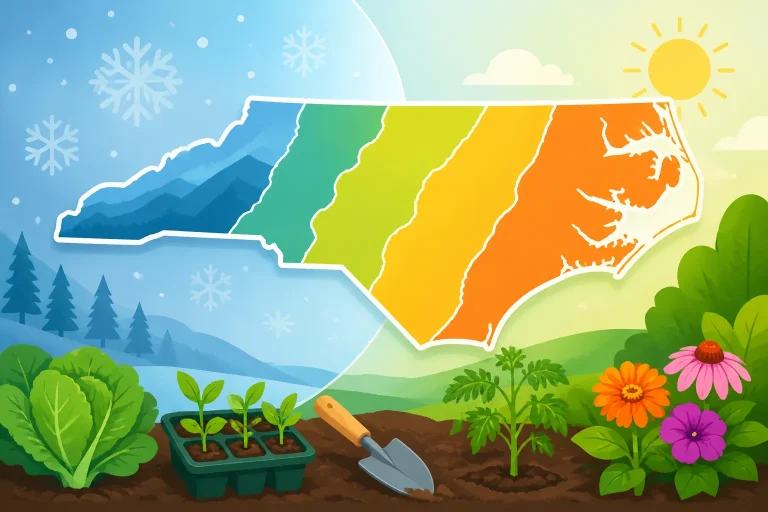
North Carolina’s fall planting calendar is not a single statewide schedule. A garden near the coast, a Piedmont backyard, and a high-elevation mountain plot can experience different temperatures and growing conditions at the same time. Even nearby gardens may differ because of shade, slope, soil, and exposure to wind.
Fall crops face two competing conditions. They need enough warm weather to germinate and establish, but they also need time to mature before cold weather slows growth or damages tender plants. Sowing too early can expose seedlings to heat and drying soil. Waiting too long can leave a crop too small to produce a useful harvest before winter.
The best starting point is to think in terms of a local growing window rather than a holiday, a fixed statewide date, or a schedule copied from another region. If you garden across the state, the differences between the Coastal Plain, Piedmont, and mountains matter. If you garden within a region, your own site still matters: a sunny, south-facing bed may stay warm longer than a shaded hollow, while an exposed slope can cool quickly.
For a broader look at how location shifts planting decisions, see North Carolina Planting Regions: Coastal, Piedmont, or Mountain? and How Elevation and Geography Shift North Carolina Planting Calendars. If you are trying to decide whether current conditions are suitable, Can You Plant Now in North Carolina? A Seasonal Timing Guide can help frame the question.
A frost date can be useful as a planning reference, but it is not a guaranteed prediction for a particular garden or year. Local weather can turn warm or cold earlier than expected, and a garden’s terrain may make it colder or warmer than a nearby station. Use forecast conditions and observed weather alongside regional planting guidance, not as a substitute for it.
Plan backward from the harvest you want
A successful fall garden begins with a harvest goal. Decide whether you want quick salads, roots for later use, leafy greens for repeated picking, or larger crops that need a longer stretch to develop. Then choose crops suited to the time and conditions you can offer them.
Seed packets and plant labels usually describe how long a crop takes to mature, but those figures are estimates under particular growing conditions. Fall days shorten, temperatures shift, and plants may grow more slowly as the season progresses. A crop that appears to fit on paper may need more time in a cool or shaded garden than in a warm, sunny one. Check the maturity information for the specific seed or transplant you are using, and allow for the possibility that local conditions will affect the pace.
Planning backward is not about calculating a perfect date. It is about asking practical questions before sowing:
- How much time does this crop need to reach a usable size?
- Will it be growing through heat, cooler weather, or both?
- Is the bed ready, or will soil preparation delay planting?
- Do you have a plan to water during dry spells?
- Can you protect young plants if temperatures change quickly?
- Will the crop still be worth growing if it matures later than expected?
For shorter-season vegetables such as turnips and leafy greens, North Carolina Piedmont gardeners have some flexibility. According to NC State Extension, planting shorter-season vegetables such as turnips and leafy greens can be delayed until September 1 in the NC piedmont. That guidance applies to the named group and region; it is not a universal date for every crop or for every North Carolina garden.
Maturity time is only part of the decision. A crop may be quick to produce but poorly suited to the heat or moisture conditions where it will be sown. Conversely, a longer-season crop may be a reasonable choice if you can start it early enough, use healthy transplants, and provide a favorable site. If you are already starting late, Fast-Maturing Crops to Sow When You Start Late in North Carolina offers a useful way to think about choices.
A fall garden does not need to be planted all at once. You can sow a small section, watch how it responds, and then use what you learn to guide later plantings. Staggered sowing can also spread out harvests, so all the greens or roots do not reach their best stage at the same time. For help planning repeat sowings, see Succession Planting Timelines for Year-Round North Carolina Harvests.
Choose crops that suit the season and your site
Many home gardeners focus on cool-season vegetables for fall. These crops generally make better choices as temperatures moderate than heat-loving summer crops do, though seedlings still need conditions that support germination and early growth. The right selection depends on how much time remains in your local growing window and whether you prefer quick harvests or crops that develop over a longer period.
| Crop group | Examples | What to consider |
|---|---|---|
| Leafy greens | Lettuce, spinach, kale, collards, mustard greens | Choose a suitable sowing or transplanting window, and keep the seedbed from drying while seedlings establish. |
| Roots | Turnips, radishes, carrots, beets | Prepare loose, workable soil so roots can develop without obstruction. |
| Brassicas | Broccoli, cabbage, cauliflower | These need a suitable start and steady care while young; consider transplants if direct-sown plants would not have enough time. |
| Peas | Garden peas and snap peas | Check local timing guidance and provide a support plan for climbing types. |
| Herbs | Selected cool-weather herbs | Match the herb to the season, site, and intended use rather than assuming every herb tolerates autumn conditions. |
The table is a starting point, not a planting calendar. A crop’s performance depends on its variety, how it is started, and local conditions. Some vegetables are commonly grown in both spring and fall, but the conditions are not identical. In fall, plants may begin in warm soil and face cooling weather later. That can make watering and early seedling care especially important.
Leafy greens are useful when you want a flexible harvest. Many can be picked as small leaves or allowed to grow larger, depending on the crop and your plans. Root crops are less flexible once their seeds are sown, because the roots need room to develop beneath the surface. For those crops, taking time to prepare the bed before sowing can make more difference than trying to correct compacted soil afterward.
Brassicas such as broccoli and cabbage can take longer to develop than quick greens. Starting with transplants may help when the remaining growing window is short, but transplants need to be healthy and acclimated to outdoor conditions. Direct sowing can work when there is time for seedlings to establish and the seedbed stays consistently suitable. Compare the options in Direct-Seeding vs Transplants for North Carolina Fall Vegetables.
Peas may appeal to gardeners who want a crop different from leafy greens and roots. Their suitability depends on local timing, the crop type, and whether you can give the plants the space and support they need. For more on planning them, see Sowing Fall Peas in North Carolina: Timing and Bed Care.
When in doubt, choose crops that match the time you actually have, not the garden you wish you had started earlier. A manageable bed of greens or roots that gets regular care is often a better plan than a large planting of crops that will struggle to establish or mature.
Adjust your plan from the coast to the mountains
Regional advice is useful because North Carolina’s geography creates different fall gardening conditions. The terms Coastal Plain, Piedmont, and mountains are broad categories, though. Local elevation, proximity to water, terrain, and exposure can shift conditions within each region.
Coastal Plain
Coastal gardens may have a longer period of relatively mild growing weather than many inland sites, but that does not remove the need to plan around heat. Soil can be sandy and may dry quickly, so seedlings need close attention while they establish. Wind exposure and heavy rain can also affect a bed, particularly where the soil is loose or drainage is fast.
For coastal sowing, concentrate on preparing the seedbed and maintaining even moisture during germination. If the soil dries at the surface, seeds may fail to sprout or young seedlings may struggle. A light covering of suitable organic material around established plants can help reduce moisture loss, but do not let mulch bury small seedlings or block their emergence.
Coastal gardeners may be tempted to push the season because temperatures can remain warm. Keep the crop’s needs in view: a cool-season vegetable may not appreciate being started in punishing heat, even if the calendar suggests there is ample time. If warm conditions persist, wait for a better planting opportunity or choose a crop and method suited to the conditions. See Coastal North Carolina Spring Planting: Moving Ahead of Inland Dates for broader regional context, and Extended Fall Vegetable Sowing Across Coastal North Carolina for a closer look at coastal fall planting.
Piedmont
Piedmont gardeners should use regional guidance while considering their own microclimate. The region includes sites that differ in exposure, soil, shade, and airflow. A protected garden near a building may hold warmth longer than a more open site, while a low spot may collect colder air.
According to NC State Extension, planting shorter-season vegetables such as turnips and leafy greens can be delayed until September 1 in the NC piedmont. Use that advice for the crops and area it names, and consult crop-specific guidance when choosing other vegetables.
A practical approach is to prioritize crops that fit the remaining season and to avoid leaving bed preparation until the last moment. If the garden is occupied by summer vegetables, decide when you can clear the space and whether the soil needs attention before sowing. Fall Crop Planning for North-Central Piedmont Growing Windows and August Sowing Dates for Piedmont Fall Vegetables provide more focused planning help.
Mountains
Mountain gardens vary greatly with elevation and exposure. A site at higher elevation may have a shorter window for fall crops than a more sheltered or lower-elevation site. Hillsides and valleys can also have different temperature patterns, so general regional advice may need adjusting for a particular yard.
For mountain gardeners, early establishment can be especially important for crops that need time to mature. Do not assume that a planting window used in a lower or warmer area will work at your site. Check local guidance, consider your own past weather observations, and be conservative when a crop needs a long period to reach harvest.
A smaller planting of crops suited to the remaining season can be more dependable than filling every bed with long-season vegetables. Keep a backup plan: if a crop is not likely to mature outdoors, it may be better to choose a quicker crop or focus on greens that can be harvested young. For more regional detail, see How Much Earlier Should Mountain Gardeners Sow Fall Crops? and Short Growing Seasons in High-Elevation Mountain Gardens.
Prepare beds before sowing or transplanting
A well-prepared bed helps seeds germinate evenly and gives young roots room to grow. It is also a chance to identify problems before they affect new plants. Clear away finished summer crops and weeds, especially those that are producing seed or harboring pests. If a crop appears diseased, do not assume it belongs in a home compost pile; check reliable guidance for how to handle the affected material.
Look at the soil’s condition before working it. Soil that is very wet can compact when disturbed, while soil that is dry and hard may be difficult to prepare well. Aim for soil that crumbles rather than smears or forms hard clods. Remove large debris and break up clumps without overworking the bed.
If the bed has been used repeatedly, consider whether it needs organic matter or a different planting location. Adding finished compost can improve the soil’s structure, but more is not automatically better. Avoid burying seeds in a bed with thick, uneven amendments or leaving large chunks of undecomposed material in the sowing area. For more on preparing beds, see How to Prepare North Carolina Bed Soil and Suppress Weeding and Adding Compost to In-Ground Flower Beds to Rebuild Organic Base.
Pay attention to crop rotation where you can. Repeatedly growing the same crop family in the same place can increase the chance of certain soil-related problems. Rotation may be difficult in a small garden, but even shifting crops to another bed can help break up that pattern. Rotating Vegetable Families to Protect North Carolina Harvests explains the reasoning and practical options.
Before planting, check the bed for drainage and compaction. If water tends to stand after rain, seeds and roots may be affected. If the surface sheds water or dries very quickly, seedlings may need more frequent observation. Choose a location that matches the crop’s light needs, and avoid placing a new planting where it will be shaded by mature summer growth unless that shade is intentional.
Do not add fertilizer automatically just because a new crop is going in. Soil conditions differ, and unnecessary fertilizer can create problems rather than solve them. If you are unsure what the bed needs, use a soil test or ask a qualified local gardening resource for guidance. For a broader discussion of interpreting soil information, see How to Read a North Carolina Soil Test Report.
Sow seeds and transplant with care
Direct sowing and transplanting each have advantages. Direct sowing avoids transplant shock and works well for crops whose roots are sensitive to disturbance. Transplants can give a crop a head start, which may matter when the season is moving along. The right method depends on the crop, the available time, the condition of the seedbed, and whether you can care for young plants.
For direct sowing, follow the seed packet’s instructions for depth and spacing. Sow into a prepared, moist seedbed, then keep the surface from drying while the seeds germinate. Seeds planted too deeply may struggle to emerge; seeds placed too shallowly may dry out or be disturbed. Avoid sowing a whole packet in a single dense line if the mature plants will need more room. Thin seedlings as needed so remaining plants can develop properly.
For transplanting, choose plants that look healthy and are not severely wilted, leggy, or damaged. Prepare the bed before bringing them outside so roots are not left waiting in exposed conditions. Water the plants and soil appropriately around planting, then monitor them as they adjust. Transplants that have grown under protected conditions may need gradual exposure to outdoor sun and wind rather than an abrupt move.
If the weather is hot, prioritize reducing stress on new plantings. Planting during a cooler part of the day can limit immediate drying, and temporary shade may help vulnerable transplants adjust if conditions are harsh. Keep any cover from pressing on tender foliage, and remove or adjust protection when it is no longer needed. How to Protect Fall Seedlings From Carolina Summer Sun and How to Shade Transplants and Seedlings During Southern Heat Waves offer more detail on managing heat stress.
Watering requires observation rather than a rigid schedule. Check the soil around seeds and young roots, not just the surface appearance of the bed. A crust that looks dry may cover moist soil, while a damp-looking surface can conceal a dry root zone. Water gently enough to avoid washing seeds away or exposing roots. As plants establish, adjust care to the soil, weather, and crop.
Mulch can help conserve moisture and suppress weeds once plants are established. Keep it from smothering seedlings, and make sure it does not form a dense mat that blocks water from reaching the soil. In a garden with rapid drying, mulch may be useful; in a poorly drained bed, it will not correct the underlying drainage problem.
Keep an eye on pests and disease as the planting grows. Inspect leaves and stems regularly, especially when plants are small and can be damaged quickly. Identify the problem before choosing a control method. If you use a pesticide or other garden product, follow the product label, which is the legal instruction for use. For crop-specific scouting advice, see Scouting Vegetable Plots to Catch Insect and Disease Problems.
Protect the planting and make the harvest count
Fall weather can change quickly, so care does not end once seeds sprout. Watch plants for signs of heat stress, moisture problems, pests, and cold injury. A plant that stops growing may need a change in conditions, but wilting or discoloration can have several causes. Check the soil and inspect the plant before reacting with fertilizer or a treatment.
Temporary covers can help protect crops when conditions turn cold, but they are not a guarantee against every temperature event. Use a cover that can be secured without crushing plants, and make sure it is suited to the protection you need. Take coverings into account when watering and checking plants. A protected bed can stay damp longer or become warm in sunlight, depending on the material and weather.
Do not treat a forecast or a typical frost date as a promise. Conditions can vary from year to year and across a single landscape. Check local forecasts when cold weather is expected, and make a plan before the temperature drops. For the difference between mild and damaging freeze conditions, see Understanding Light Freezes vs Damaging Killing Freezes in NC and Protecting Tender Crops During Late North Carolina Spring Freezes.
Harvest at the stage that suits the crop and how you plan to use it. Leafy greens are often useful before they reach their largest size, while root crops need enough time to develop. Follow crop-specific harvest guidance, and check plants regularly so usable produce does not sit too long in the garden. Frequent picking can also make it easier to spot damage or disease early.
If a planting does not perform, treat it as information for the next round rather than proof that fall gardening is a poor fit. Ask whether the crop was started in suitable conditions, whether the seedbed stayed moist, whether the plant had enough time, and whether the site was too hot, shady, dry, or exposed. Adjusting the crop choice or method can be more effective than repeating the same planting with extra inputs.
A simple record can make next season easier. Note what you planted, where it grew, how it was started, and what the weather and harvest were like. You do not need a complicated system. A few observations about which beds stayed moist, which crops struggled in heat, and which plants matured well can help you make better choices the next time you plan a fall garden.
Frequently Asked Questions
What vegetables are good choices for a North Carolina fall garden?
Leafy greens, root crops, brassicas, and peas are common fall-garden options. Match the crop to your location, the time it needs to mature, and the conditions in the bed.
Can I use the same planting dates across North Carolina?
No. Coastal, Piedmont, and mountain gardens can have different conditions, and elevation and local exposure matter too. Use regional guidance as a starting point and confirm crop-specific timing for your area.
Is a frost date a guaranteed deadline?
No. Frost timing varies, and a date used for planning is not a forecast for a particular garden. Monitor local weather and consider how your site’s terrain and exposure affect cold conditions.
Should I direct-sow or transplant fall vegetables?
It depends on the crop and how much growing time remains. Direct sowing suits crops that establish well in place, while transplants can help when a crop needs a head start. Follow crop-specific guidance and care for seedlings as they adjust outdoors.
Disclaimer
This article is for general informational purposes only and does not constitute professional advice. Laws, prices and regulations vary by location and change over time. Consult a qualified professional for guidance on your specific situation. North Carolina Gardening Guide is not a government agency and is not affiliated with any university extension, state department of agriculture or other government agency.