North Carolina Planting Regions: Coastal, Piedmont, or Mountain?
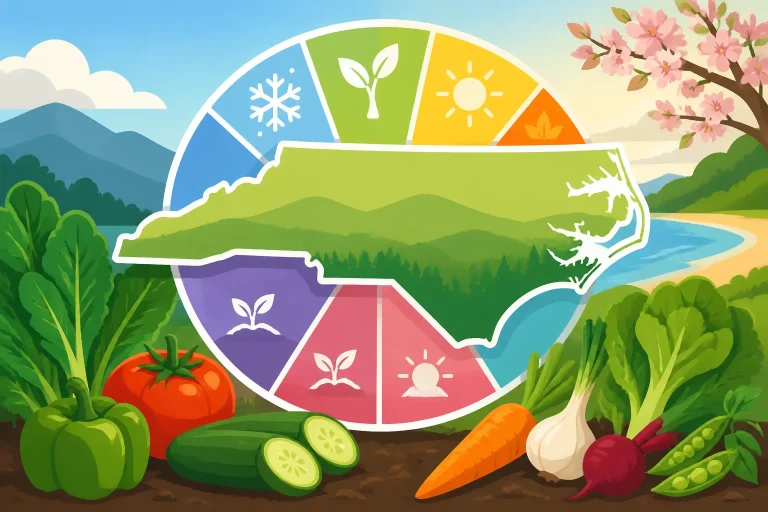
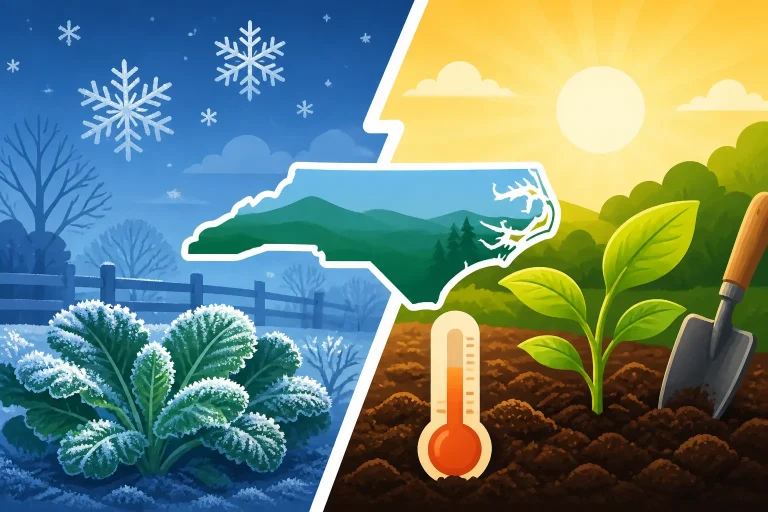
A planting calendar that works near the coast may be too early in a mountain garden, while a mountain schedule can leave coastal gardeners waiting through useful growing weather. North Carolina’s varied elevation, distance from the ocean, and local terrain shape planting conditions. Understanding your region helps you choose better timing, reduce weather-related setbacks, and adjust a general calendar to your own yard.
Why North Carolina Has More Than One Planting Calendar
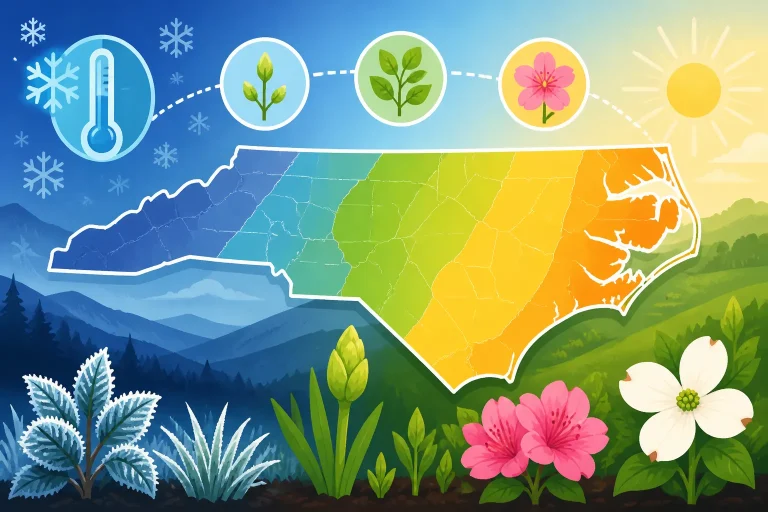
North Carolina stretches from low-lying coastal areas through the Piedmont to the mountains. Those regions differ in elevation, exposure to ocean influence, terrain, soils, and the timing of spring and fall cold. As a result, the same crop may have a longer planting window in one part of the state and a shorter, more cautious window in another.
The three-region model is a useful starting point, not a precise forecast for every garden. A coastal yard can be cooler or more exposed than another yard nearby. A Piedmont garden in a sheltered urban spot may warm sooner than an exposed rural plot. In the mountains, elevation and slope can make two nearby gardens experience different overnight temperatures.
These differences affect more than frost. Soil warms and dries at different rates; summer heat can arrive at different points in the growing season; and rainfall or drainage can vary across short distances. A planting date is therefore best treated as a window to evaluate, not a guarantee that conditions are ready.
| Region | General growing-season pattern | Common timing challenge | What to check before planting |
|---|---|---|---|
| Coastal Plain | Often has an earlier spring and a longer fall growing opportunity than inland areas | Warm spells can be followed by a cold snap; sandy soils may dry quickly | Forecast, soil warmth, drainage, and moisture |
| Piedmont | Intermediate conditions, with local variation from terrain and urban or rural setting | Spring and fall timing can shift noticeably from one site to another | Local frost information, soil condition, and exposure |
| Mountains | Higher elevations and varied slopes can mean a later spring and shorter warm-season window | Late cold, cool soils, and limited time for heat-loving crops to mature | Elevation, slope, overnight lows, and crop maturity time |
For a more detailed statewide overview, see North Carolina Planting Regions: Coastal, Piedmont, or Mountain? — wait, that is this article’s own title and should not be linked. Instead, use North Carolina Vegetable Planting by Region: Coast, Piedmont, Hills for region-by-region vegetable timing, and North Carolina Spring and Fall Planting Schedule Overview for a seasonal framework.
Think in conditions, not just regional labels
A regional calendar can narrow your planning, but it cannot account for every yard. Before setting out a crop, consider the conditions at the actual planting spot:
- Elevation and slope: Higher ground is often cooler, while low spots can collect cold air. A south-facing slope may warm earlier than a shaded or north-facing one.
- Distance from water: Coastal water can influence nearby temperatures, but the effect varies by location and exposure. A garden close to the shore is not automatically free of frost risk.
- Sun and shade: A sunny bed warms differently from a garden under trees or beside a building. Shade can slow spring warming and make a cool-season crop last longer into warm weather.
- Soil texture and drainage: Sandy soils often drain quickly; heavier soils may stay wet longer. Neither condition should be mistaken for readiness to plant.
- Recent weather: A warm week does not mean a cold snap is over. Look at the forecast and recent soil conditions as well as the calendar.
- Crop needs: Cool-season vegetables and tender, heat-loving crops do not share the same safe starting conditions.
For a practical way to assess a specific bed before planting, see Four Site Checks to Complete Before Planting Your North Carolina Bed. The key is to use regional guidance to set expectations, then adjust for the garden’s own conditions.
Coastal Plain: Earlier Opportunities, With Local Risks
The Coastal Plain is generally the state’s lowest-elevation region and includes a broad range of settings, from inland locations to areas influenced by nearby sounds and the Atlantic. Its comparatively mild conditions can create earlier opportunities for spring planting and a longer period for fall crops than many inland gardens. But “coastal” does not mean that every site is warm, frost-free, or ready at the same time.
Spring planting near the coast
A mild spell can make an early start tempting. Cool-season crops are usually a better fit for that kind of early opportunity than tender crops that need warm soil and reliably mild nights. Some cool-season seeds and plants can tolerate cooler conditions, but tolerance varies by crop and by the severity and duration of cold.
Tender vegetables, including many summer crops, need more than a warm afternoon. Cold soil can slow their growth, and chilly nights can stress plants even after the air feels pleasant during the day. Check soil warmth and upcoming nighttime conditions before sowing or transplanting them. Spring Planting in North Carolina: Cool vs Warm-Season Crops explains why these crop groups need different conditions, and Waiting for Warm Soil Before Sowing Summer Vegetables in NC focuses on the soil side of that decision.
The coast can also see sudden swings. A stretch of mild weather may be interrupted by a late cold snap, especially in a site exposed to wind or open sky. Keep protective materials ready if tender seedlings are already outside, but do not use covers as a substitute for choosing appropriate planting conditions. See Protecting Tender Crops During Late North Carolina Spring Freezes for practical considerations when cold threatens.
Sandy soil and moisture management
Many coastal gardens have sandy or fast-draining soil, though the region is not uniform. Sand can be easy to work and may warm quickly, but it can also lose moisture more quickly than heavier soil. That matters after seeds germinate and transplants begin establishing roots.
Before planting, check whether water moves through the bed too rapidly or sits in low areas. Build soil gradually with suitable organic matter rather than assuming that adding a large quantity of compost will solve every drainage or fertility problem. Mulch can help reduce surface drying once plants are established, but it should not be piled against plant stems.
A calendar does not tell you when a bed needs water. Check soil moisture near the root zone and adjust to the crop and conditions. Watering North Carolina Gardens: Weekly Infiltration vs Schedules can help explain why a fixed watering schedule may not fit every site.
Making use of the longer fall opportunity
In many coastal locations, fall conditions can allow vegetables to keep growing after inland gardens have become more exposed to cold. That can make a second growing cycle worthwhile, especially for crops suited to cooling weather. The useful window still depends on how long a crop takes to mature, when local cold is likely, and whether the bed is already occupied.
Plan backward from the harvest you want. Choose crops that can mature in the available time, and account for the fact that seedlings may establish more slowly in hot weather. Shade and careful moisture management can help seedlings get started during summer heat, but they do not remove the need to select a sensible planting window. For regional details, see Coastal Plain Vegetable Calendar: Maximizing the Long Growing Year and Extended Fall Vegetable Sowing Across Coastal North Carolina.
The coast’s longer opportunity is not an instruction to plant every crop earlier or later. It is an extra planning advantage when crop maturity, soil condition, and the local forecast line up.
Piedmont: A Middle Ground That Still Needs Local Judgment
The Piedmont sits between the Coastal Plain and the mountains, but it should not be treated as a single uniform garden. Rolling terrain, differences in elevation, urban heat, shade, and local exposure all affect when a bed warms and how cold air moves across it. A statewide or regional calendar can provide a starting point, but a yard’s microclimate can shift practical timing.
Spring conditions can change quickly
Piedmont gardeners may experience warm days before the risk of a damaging cold night has passed. This makes it important to distinguish between cool-season crops that can handle some chilly conditions and tender crops that need warmer soil and more dependable nights.
Avoid basing a planting decision on one warm afternoon. Consider the short-term forecast, soil temperature, and whether the crop can tolerate a setback. A newly planted seedling has less established root growth than a mature plant and can be more vulnerable to sudden cold or drying conditions. The risks of moving seedlings outdoors are discussed in When Is It Safe to Move Seedlings Outdoors in North Carolina?.
Piedmont gardens can also differ from nearby weather stations. A low-lying bed may collect cold air, while a sheltered spot near a structure may warm earlier. Station records are helpful context, but they do not promise the same conditions at every home. Using Weather Station Freeze Normals to Schedule Spring Sowing explains how to interpret those records without treating a historical average as a guarantee.
Summer heat and soil conditions
The Piedmont’s planting calendar is not only about the last cold night. Summer heat can affect establishment, flowering, fruit set, and the quality of some crops. A plant that was started at a reasonable time may still struggle if it is placed in a hot, dry bed or an exposed spot during a heat wave.
When planning a summer garden, match the crop to the bed’s sun, soil, and available water. Keep newly planted seedlings from drying out while they establish. Where a crop is sensitive to intense heat, consider whether a spring or fall growing window is a better fit than the hottest part of summer. See Protecting North Carolina Garden Plants During Extreme Summer Heat for ways to think through heat stress.
Piedmont soils vary widely. Some sites have clay-heavy soil that drains slowly or becomes difficult to work when wet; others have better drainage or have been altered by construction. Do not work a bed simply because the calendar says it is planting time. If soil sticks heavily to tools or smears rather than crumbling, wait until it is workable. Raised Beds vs In-Ground Plots in North Carolina Clay Soils and Amending North Carolina Heavy Clay Soils With Organic Matter offer more on handling these conditions.
Fall planting in the Piedmont
Fall can be a productive season, but a successful planting needs enough time to germinate, establish, and grow before cold slows development. Do not assume that the first day of cooler weather is the ideal sowing signal. Consider the crop’s maturity needs, the remaining daylight and warmth, and the likely timing of local freezes.
A crop that takes longer to mature may need an earlier start than a fast-growing leafy crop. Transplants can sometimes give a fall planting a head start, but they still need conditions that support establishment. Check whether the bed is hot or dry before sowing, and prepare it before the window opens rather than waiting until conditions are already changing.
For a regional fall-planning overview, see Fall Crop Planning for North-Central Piedmont Growing Windows and August Sowing Dates for Piedmont Fall Vegetables. These topics help narrow timing; the actual choice should still reflect the garden’s elevation, exposure, soil, and the crop selected.
Mountains: Elevation and Terrain Shape a Shorter, More Variable Season
Mountain gardening is especially sensitive to elevation and local terrain. Higher elevations tend to have cooler conditions and a shorter warm-season opportunity, but the region contains many slopes, valleys, and sheltered sites. A garden at one elevation may not follow the same schedule as another garden a short distance away.
Late cold and cool soil
Mountain gardeners often need to be cautious about planting tender crops too early. A warm spell does not necessarily mean the soil has warmed enough or that cold nights are finished. In spring, give extra attention to soil temperature and the forecast for the garden’s own location.
Cool-season crops can often be started earlier than tender vegetables, but the exact tolerance depends on the crop and the weather. A light frost and a damaging freeze are not interchangeable, and plants vary in how they respond. Which North Carolina Crops Can Tolerate Light Spring Freezes? can help distinguish crops that may tolerate brief chill from those that need protection.
Use crop maturity information to plan around the shorter warm-season window. If a warm-season crop takes a long time to mature, a late start may leave too little time for harvest before cool weather returns. Starting indoors can help some crops get established earlier, but seedlings still need gradual acclimation and suitable outdoor conditions. For the trade-offs between sowing outside and starting indoors, see Direct Sowing vs Indoor Seed Starting for Early Carolina Springs.
Slope, cold-air movement, and exposure
The word “mountain” does not describe one uniform temperature pattern. Cold air can settle in low spots, while slopes and sheltered positions can experience different conditions. Wind exposure, tree cover, and the direction a bed faces may also affect how quickly it warms and how much protection it gets.
Before committing a large planting, observe the site. Note where frost lingers, where snow or cold air tends to collect, and which parts of the garden receive morning or afternoon sun. This local observation will not remove weather uncertainty, but it can help explain why a planting in one bed succeeds while the same crop in another bed struggles.
Historical frost information is useful for planning, but it represents probabilities rather than fixed dates. It cannot tell you exactly when a particular garden will experience its last spring freeze. Why Spring Frost Dates Vary Widely Across North Carolina and How Elevation Changes Last Spring Freeze Timing in Western NC provide context for interpreting that variability.
Selecting crops for a shorter warm-season window
In a high-elevation garden, crop choice can matter as much as planting date. Look for crops suited to cool conditions or varieties with maturity timing appropriate to the available season. The seed packet or plant label can help you compare maturity expectations, but use those figures as planning estimates rather than promises. Conditions such as soil, temperature, water, and sunlight affect how quickly a crop develops.
Staggering plantings can spread risk and harvest timing. Instead of placing all seeds or transplants in the ground at once, use a few smaller plantings when the season allows. That way, one cold snap, dry spell, or missed window is less likely to determine the whole garden’s result. For more on choosing crops based on available time, see How to Match Vegetable Maturity Days to Local Growing Seasons.
Mountain fall planting also needs a conservative plan. Cooling weather may arrive earlier at higher sites than at lower elevations, and a crop needs time to establish before growth slows. How Much Earlier Should Mountain Gardeners Sow Fall Crops? discusses the role of elevation in adjusting fall timing.
Match the Planting Window to the Crop
A regional calendar is most useful when paired with the crop’s needs. Two vegetables planted on the same day may respond very differently because one grows best in cool weather while the other needs warm soil and mild nights. Grouping plants by season helps avoid a common mistake: treating every spring planting as if it were ready at once.
Cool-season crops
Cool-season vegetables generally suit cooler periods of the year. They can be useful for early planting and fall harvests, though individual crops vary in cold tolerance, heat tolerance, and time to maturity. Some can handle light frost; others may be damaged by colder conditions or by prolonged exposure.
As temperatures rise, cool-season plants may grow differently, become stressed, or bolt before producing the harvest you expect. If you want to extend their harvest, consider shade, moisture, and sowing timing rather than assuming they will perform well through summer. When to Plant Cool-Season Crops Before Spring Heats Up covers the importance of timing these crops before the season turns too warm.
Warm-season crops
Warm-season crops generally need warmer soil and more settled conditions than cool-season crops. Planting too soon can result in slow growth or damage, even if the weather has recently felt mild. Waiting for warm soil is particularly important for seeds that need warmth to germinate reliably and for transplants that are vulnerable to cold stress.
Temperature is only one part of readiness. The bed should also be workable and adequately moist, and seedlings should be ready to handle outdoor conditions. A transplant grown indoors may need gradual exposure to sunlight, wind, and temperature shifts before it is moved permanently outside. See How Soon to Transplant Seedlings After Spring Soil Warms for more on this transition.
Fall crops
Fall crops have to establish while summer heat may still be present, then continue growing as days cool. That means the ideal sowing time can come before the weather feels like fall. Delaying too long can leave a crop without enough time to mature.
The available window differs by region. Coastal gardens may have more flexibility than high-elevation mountain gardens, but neither should rely on a single statewide cutoff. Choose crops that fit the time left, prepare the bed in advance, and keep seedlings from drying out during hot weather. Guide to Sowing Fall Vegetables and Cover Crops in NC offers a broader approach to fall planting.
Use a crop calendar as a planning tool
A month-by-month calendar can help organize seed starting, bed preparation, sowing, and transplanting. It should not replace checking soil and weather. Use it to identify likely opportunities, then adapt the schedule to the region and the crop.
A useful planning sequence is:
- Identify the regional starting point: Coastal Plain, Piedmont, or mountains.
- Check the site: Note elevation, slope, shade, drainage, and exposure.
- Classify the crop: Cool-season, warm-season, or fall crop.
- Review the crop’s needs: Consider temperature, maturity time, and whether it is being direct-sown or transplanted.
- Check current conditions: Look at soil warmth, soil moisture, and the local forecast.
- Decide whether to proceed, wait, or protect: Avoid forcing a planting simply because a calendar date has arrived.
For a broader seasonal reference, Month-by-Month Vegetable Planting in North Carolina can help connect individual tasks to the year, while Can You Plant Now in North Carolina? A Seasonal Timing Guide addresses the question of immediate conditions.
Build a Calendar Around Your Own Garden
Once you know the broad regional pattern, keep simple notes about your site. Record when a bed becomes workable in spring, where cold lingers, which crops need protection, and how quickly the soil dries after rain. Over time, those observations can make regional guidance more useful than a generic schedule.
Keep a small planting record
A notebook, spreadsheet, or garden calendar can capture information that a statewide planting chart cannot. For each planting, record the crop, location, sowing or transplant date, weather conditions, and any problems. Note whether seeds emerged evenly, whether transplants grew steadily, and whether a bed stayed too wet or dried too fast.
The goal is not to create a perfect record. It is to recognize patterns. If one bed repeatedly stays colder than another, plan tender crops accordingly. If seedlings struggle in a sunny spot during summer, consider a more suitable season or temporary shade. If a fall crop was too small before cold weather, try an earlier sowing or a crop with a shorter maturity period.
Use local weather information carefully
Weather stations and historical records help estimate the likelihood of freezes, but conditions vary from year to year and from station to garden. A probability date is not a promise that frost will happen, or that it will not happen afterward. Treat local weather tools as planning aids and monitor short-range forecasts when vulnerable crops are outside.
A station may not reflect the low point of a valley, a sheltered courtyard, or an exposed slope. If the garden regularly differs from the reported forecast, make a note of that pattern. The difference may be important when deciding whether to plant tender crops or protect seedlings.
Prepare before the planting window
Good timing is easier when the bed is ready in advance. Clear weeds, check drainage, and make sure paths and irrigation are in workable condition before a suitable weather window arrives. Avoid digging or cultivating soil when it is saturated. If soil needs improvement, make changes gradually and base amendments on the site’s needs rather than applying materials automatically.
Seed and transplant planning also takes time. Check seed packets and plant labels for maturity information and germination needs. If starting indoors, allow enough time to raise sturdy seedlings and acclimate them before planting out. If buying transplants, select healthy plants suited to the season and avoid leaving them exposed to stressful conditions while waiting for the bed to be ready.
Stay flexible when weather disrupts the plan
A late freeze, hot spell, or period of heavy rain can push a planting schedule off course. Avoid treating a missed date as a reason to plant an unsuitable crop immediately. Instead, reassess what remains possible: choose a faster-maturing crop, shift to a more favorable bed, protect an existing planting where appropriate, or wait for the next suitable window.
This flexibility is especially valuable in gardens near the boundaries between regions or in sites with pronounced microclimates. A coastal gardener in an exposed location may need to be more cautious than a sheltered neighbor. A mountain gardener at a lower, protected site may have different options from someone gardening at higher elevation. The region gives context; local conditions guide the final call.
Frequently Asked Questions
Which North Carolina region has the earliest planting opportunities?
The Coastal Plain often has earlier spring opportunities and a longer fall growing window than many inland or higher-elevation sites. Conditions still vary by location, crop, soil, and weather, so coastal gardeners should check local conditions before planting.
Is the Piedmont planting calendar the same across the region?
No. Elevation, slope, shade, urban or rural setting, and soil can all affect planting conditions. Use a Piedmont calendar as a starting point, then adjust it to the garden’s exposure and local weather.
Why do mountain gardens often need different timing?
Higher elevation and local terrain can bring cooler conditions, a later spring, and a shorter warm-season opportunity. Cold air can also collect in some locations, so nearby gardens may not experience the same conditions.
Should frost dates decide every planting?
No. Frost information helps estimate risk, but the dates are probabilities and vary from year to year. Crop tolerance, soil temperature, forecast conditions, and the garden’s microclimate all matter.
How can a gardener tell whether a crop is a good fit for the local season?
Check the crop’s temperature needs and maturity information, then compare those needs with the likely growing window in the garden. For tender crops, consider soil warmth and nighttime conditions; for fall crops, allow enough time to establish and mature before cold slows growth.
Disclaimer
This article is for general informational purposes only and does not constitute professional advice. Laws, prices and regulations vary by location and change over time. Consult a qualified professional for guidance on your specific situation. North Carolina Gardening Guide is not a government agency and is not affiliated with any university extension, state department of agriculture or other government agency.