Protecting North Carolina Garden Plants During Extreme Summer Heat
North Carolina’s summer heat can wilt plants quickly, but wilting does not always mean the soil is dry. High temperatures, sun, wind, and limited root space can all stress a garden. The right response depends on the plant and the conditions at its roots. These steps help you protect vegetables, flowers, and container plants without overwatering or creating new problems.
Recognize heat stress before choosing a response
A plant that droops in afternoon heat may be losing water faster than its roots can replace it. If it perks up later in the day or by morning, heat stress may be the main cause. If it stays limp, check the soil before watering: dry soil can signal a genuine need for water, while wet soil suggests another issue.
Push a finger or a small hand tool into the soil near the root zone. The surface can look dry while soil below it is still moist, or a damp surface can hide dry soil farther down. Check more than one spot, especially in a bed with different sun exposure or soil texture. For a closer look at how to assess watering depth, see How Deep Should You Water Garden Soil to Soak Plant Roots?
Signs to watch for
Heat and water stress can look different from one plant to another, but common signs include:
- Leaves that droop, curl, or fold during the hottest part of the day
- Leaf edges that turn brown or crisp
- Pale or scorched patches on exposed leaves or fruit
- Flowers dropping or failing to set fruit
- Slow growth, small leaves, or premature bolting in leafy crops
- Plants that remain wilted after the sun has passed
Some symptoms have more than one possible cause. Brown edges, for example, may follow dry soil, heat, wind, root damage, or excess salts. Yellow leaves can reflect stress but are not a reliable reason to add water or fertilizer by themselves. Compare the symptoms with soil moisture and the plant’s recent conditions before deciding what to do.
Heat stress or a watering problem?
Heat stress and inadequate watering often overlap, but watering every wilted plant automatically can make matters worse. Roots need air as well as water; persistently saturated soil can limit oxygen and encourage root problems. A plant in wet soil may wilt because damaged roots cannot take up water properly.
| What you observe | What to check | Practical response |
|---|---|---|
| Wilting in afternoon, leaves recover later | Root-zone soil moisture | If soil is moist, wait and check again; add temporary shade if exposure is intense |
| Wilting that persists into morning | Soil below the surface, including around the root ball | Water slowly if the root zone is dry, then check that moisture reached the roots |
| Wet soil and continued wilting | Drainage, root condition, and whether water is pooling | Do not add more water until you understand why the soil is staying wet |
| Brown patches on the sun-facing side | Recent exposure, plant placement, and moisture | Reduce intense afternoon exposure where practical and keep soil moisture steady |
| Containers drying quickly | Pot size, drainage, wind, and how much mix is dry | Check pots more often during hot spells and water thoroughly when needed |
Also consider where the plant is growing. A sunny wall or paved surface can add reflected heat. A windy spot may dry leaves and potting mix faster. Plants near trees can face competition from established roots, even when nearby ground looks green. The same watering approach may not suit every part of a yard.
In North Carolina, heat protection needs to suit the site, not just the calendar. Coastal gardens, Piedmont yards, and mountain gardens can differ in wind, sun, soil, elevation, and how quickly conditions change. Protecting North Carolina Garden Plants During Extreme Summer Heat is this page’s subject; for broader seasonal planning, North Carolina Planting Regions: Coastal, Piedmont, or Mountain? explains why garden conditions can vary across the state.
Water roots well and protect the soil
Good summer watering is less about following a fixed schedule and more about checking the soil and delivering water where roots can use it. A quick sprinkle may wet leaves and the soil surface without reaching the deeper root zone. A slow, thorough soak is generally more useful when the soil is dry, provided the bed drains well.
Water near the base of the plant so less is lost to wind or evaporation. A watering wand, drip line, soaker hose, or carefully directed hose can help keep water close to roots. If water runs off or pools, slow the flow and give it time to soak in. In clay soil, water may take longer to enter; in sandy soil, it may drain away faster. Check beneath the surface rather than assuming the whole bed is evenly moist.
For more on adjusting watering to actual soil conditions, see Watering North Carolina Gardens: Weekly Infiltration vs Schedules.
Choose a useful time and method
Watering in the morning gives plants time to take up moisture before the hottest part of the day. It also allows foliage that gets wet to dry as the day progresses, which can reduce conditions that favor some leaf diseases. If morning watering is not practical, water when you can do so thoroughly and avoid repeatedly wetting foliage late in the day.
A brief midday watering may not solve the problem if the soil is already moist and the leaves are reacting to heat. Instead of repeatedly watering a plant that remains droopy, inspect the root zone and consider temporary shade. Avoid trying to compensate for hot weather by keeping every bed constantly wet. Consistent moisture is helpful; waterlogged soil is not.
New transplants need particular attention because their roots may still be confined to the original pot-shaped root ball. Check both the root ball and the surrounding soil. A dry root ball can sit in moist surrounding ground without taking up enough water, while a wet root ball can remain soggy even when nearby soil feels dry. If newly planted crops struggle, How Soon to Transplant Seedlings After Spring Soil Warms covers transplant establishment, while Watering Established vs New Transplants in North Carolina Beds focuses on watering differences.
Use mulch to reduce soil stress
A layer of organic mulch can slow moisture loss, limit soil temperature swings, and reduce competition from weeds. Apply it over the soil around plants while leaving space around stems and trunks. Mulch piled directly against stems can keep the area too damp and may contribute to decay or provide cover for pests. If a bed already has mulch, check its condition and the soil beneath it before adding more.
Mulch does not replace watering. It can help the soil hold moisture, but a dry root zone still needs water. It also does not make a poorly drained bed drain well. Before adding material, check whether the soil is already wet, compacted, or holding water. The practical details are covered in Applying Organic Mulch Around Established Garden Transplants.
Weeds compete with crops for water and light. Pull or cut them while they are small, taking care not to disturb crop roots or leave soil bare unnecessarily. In hot weather, avoid extensive digging around shallow-rooted plants if the soil is dry; cultivation can disturb roots and expose moist soil to faster drying.
Reduce direct heat and adapt care to the plant
When roots have adequate moisture but sun and heat are still overwhelming a plant, reduce its exposure. Temporary shade can help young transplants, leafy crops, and plants in containers that cannot be moved out of the sun. Shade works best when it cuts the harshest exposure without trapping hot air or blocking light for the whole day.
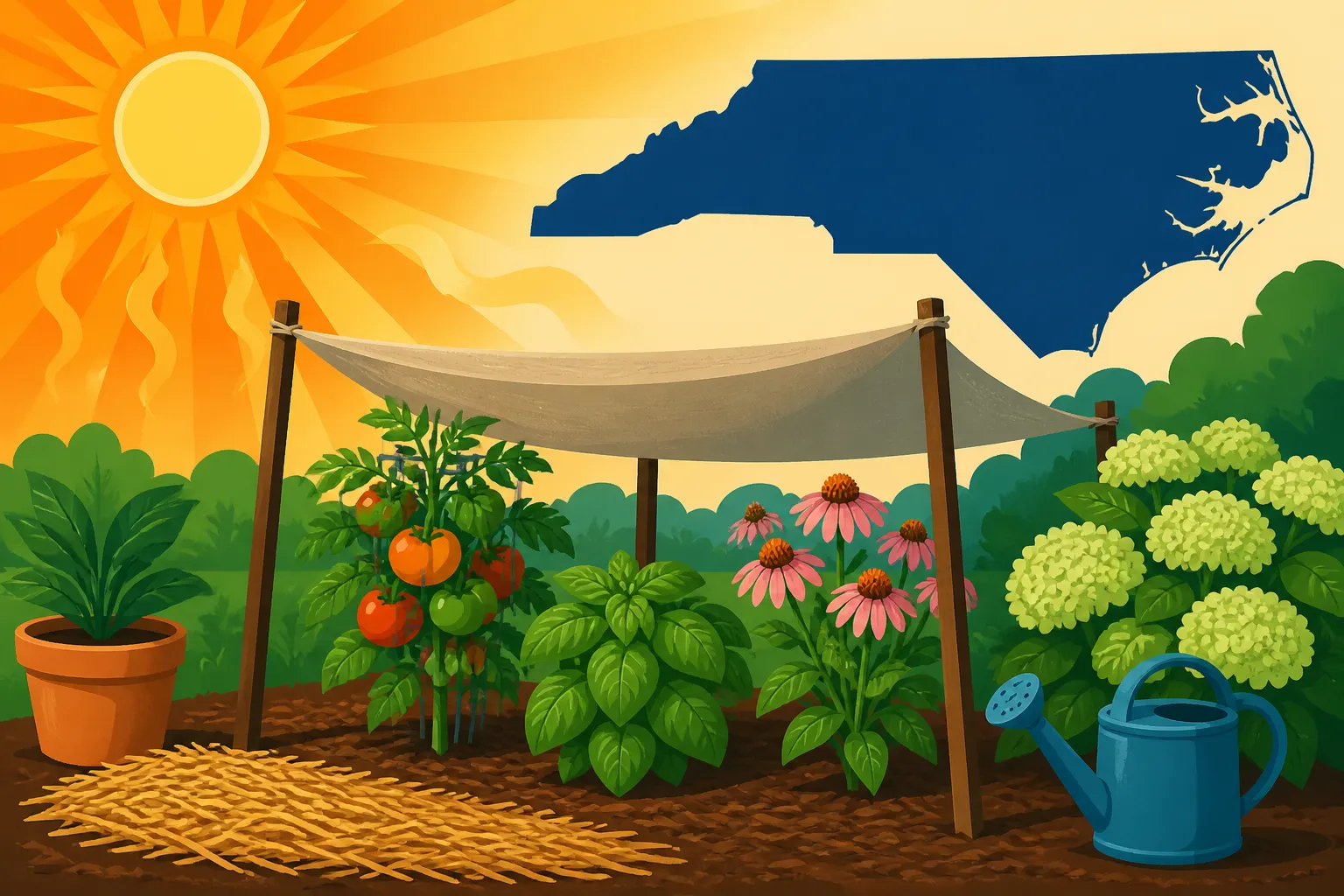
Use shade cloth, a light fabric, or another breathable screen supported above the plants. Keep material off foliage when possible, and secure it so it does not rub plants or blow away. A frame, hoops, or stakes can hold the cover in place. Leave room for air to move around the plants, and remove or reposition the shade when conditions improve. The goal is to soften intense sun, not to create a permanently dark, enclosed space. See How to Shade Transplants and Seedlings During Southern Heat Waves for more on temporary shade.
Match protection to the crop
Leafy vegetables often show heat stress sooner than crops that tolerate summer conditions better. Lettuce, spinach, and other cool-season crops can bolt or turn bitter as temperatures rise, even if they have enough water. Shade may reduce stress for a while, but it cannot make a cool-season crop perform like a heat-loving one through the hottest stretch.
For crops that are flowering or setting fruit, uneven water can contribute to poor production. Keep moisture as consistent as practical, but do not assume every dropped flower or misshapen fruit is caused by heat. Pollination, pests, disease, and other growing conditions can also matter. Avoid heavy pruning or abrupt changes to the plant while it is stressed unless there is a clear reason to act.
A plant with a healthy root system and an appropriate spot may tolerate heat better than a recently planted one. When possible, choose planting dates that give transplants time to establish before the most demanding weather. Spring Planting in North Carolina: Cool vs Warm-Season Crops and Month-by-Month Vegetable Planting in North Carolina can help with seasonal timing.
Give containers extra attention
Pots heat up and dry out faster than many in-ground beds, particularly when they are small, exposed to wind, or placed on hot paving. Check the potting mix regularly, including below the surface. If a container is dry, water slowly until the mix is thoroughly moistened and excess water can drain. If water runs straight through, the mix may have dried enough to resist absorbing water, so apply water gradually and check whether the root zone has become moist.
Where practical, move pots to a spot with morning sun and afternoon shade during a heat wave. Grouping containers can reduce exposure to wind, though they still need enough air circulation. Check drainage holes and do not leave pots sitting in standing water. A light-colored or insulated pot may warm less than a dark container in direct sun, but the pot’s size, placement, and watering needs still matter. Watering Potted Vegetables Through North Carolina Summer Heat has container-specific guidance.
Avoid adding fertilizer as a quick fix
Fertilizer does not correct heat stress or a dry root zone. Applying it to a plant that is struggling can add further stress, and excess fertilizer salts can injure roots. Wait until the plant is stable before considering whether it needs nutrients. Base fertilizer decisions on the plant’s needs, the soil, and the product directions; follow the product label for any fertilizer used.
Likewise, do not prune heavily just because a plant looks tired. Removing healthy foliage can reduce the plant’s ability to shade itself and support growth. Remove dead or badly damaged material when appropriate, but delay major pruning until the plant has recovered unless damage creates a safety or disease concern.
Make a heat-wave plan and help plants recover
A little preparation makes it easier to respond without rushing from one wilted plant to another. During a forecast hot spell, check which beds and containers dry fastest. Make sure watering equipment works, identify spots where temporary shade can be placed, and remove weeds that are competing with crops. Water the root zone when it needs it rather than waiting for severe wilting.
Group tasks by plant and location. Containers on a sunny deck may need more frequent checks than a mulched bed, while a new transplant may need closer monitoring than an established perennial. Keep notes on which locations repeatedly dry out or develop scorch. That can help you choose future planting spots and decide whether a windbreak, shade structure, larger container, or different crop is a better fit.
During the hottest part of the day
If plants wilt in afternoon sun, first check the soil and the plant’s recovery pattern. If the soil is dry, water the root zone thoroughly and check again later. If the soil is moist, additional water may not help; temporary shade or reduced exposure may be more effective. Avoid walking or working on very wet beds when doing so could compact the soil.
Harvest crops that are ready rather than leaving mature produce exposed to prolonged heat. Remove fallen or decaying plant material when it could attract pests or contribute to disease. Avoid large bed renovations, unnecessary transplanting, and major pruning while plants are under severe stress.
After the heat eases
Wait for a plant to show signs of recovery before judging how much damage it has sustained. Leaves that are already scorched generally will not turn green again, but the plant may produce healthy new growth. Avoid removing every damaged leaf at once if some are still functioning and protecting the plant from direct sun.
Check for new growth, firm stems, and whether the soil is draining normally. If a plant continues to decline even after temperatures ease and soil moisture is appropriate, look for other causes such as root injury, pests, disease, or poor drainage. Persistent symptoms are a reason to reassess rather than simply increasing water or fertilizer.
If a crop has bolted, stopped producing, or suffered extensive damage, replacing it may be more practical than trying to maintain it through unsuitable conditions. For fall crops, plan ahead: young seedlings can face both hot sun and dry soil during establishment. How to Protect Fall Seedlings From Carolina Summer Sun covers that challenge.
Prepare for recurring hot summers
Use this season to improve the garden’s resilience. Add organic matter where appropriate to support soil structure, keep beds mulched without burying stems, and make sure water can reach the root zone. Place crops according to their sun needs and the shade patterns of the yard. Consider a temporary shade support that can be installed quickly when temperatures climb.
For future plantings, use crops and varieties suited to the season and site, and avoid overcrowding. Plants packed too closely can compete for water and airflow. Keep paths clear enough to reach the base of plants for soil checks. A plan that makes it easy to inspect and water plants is more useful than a rigid schedule that ignores changing weather.
Frequently Asked Questions
Should I water a wilted plant immediately?
Check soil moisture first. If the root zone is dry, water thoroughly. If it is already moist, the plant may be reacting to heat or another problem, and more water could worsen saturated conditions.
Is afternoon wilting always a sign that a plant needs water?
No. Some plants droop during the hottest hours and recover when temperatures ease. Check the soil and see whether the plant recovers later or by morning before deciding to water.
Does mulch prevent heat damage?
Mulch helps reduce moisture loss and soil temperature swings, but it cannot prevent all heat damage or substitute for watering when the root zone is dry. Keep mulch away from plant stems.
Can shade cloth save a cool-season crop in summer?
Temporary shade can reduce intense sun exposure, but it cannot eliminate the effects of sustained heat. Cool-season crops may still bolt or decline when conditions are too warm.
Disclaimer
This article is for general informational purposes only and does not constitute professional advice. Laws, prices and regulations vary by location and change over time. Consult a qualified professional for guidance on your specific situation. North Carolina Gardening Guide is not a government agency and is not affiliated with any university extension, state department of agriculture or other government agency.